

Welcome back to Artcade, the travel agency specialized in hard-to-reach destinations. The flights you find online require three layovers, more than 24 hours of travel, and pit stops in terminals nobody can find on a map? Here we travel instantly, and on a budget. Don’t believe it? Just finish the intro and start the episode. Enjoy the read!
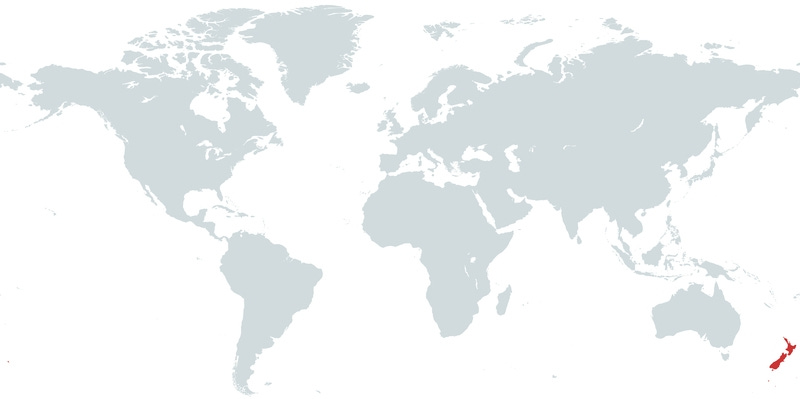
In every World Tour episode there’s a ritual I never skip: commenting on the map. And wouldn’t you know it, today’s country sits in the bottom-right corner, not because it’s truly the farthest point on Earth, but because the most common way we draw the world decided that spot is a corner, not the center.
The thing is, there are countless maps, all different. I’d love to see one where New Zealand and the South Pacific finally get the spotlight, with the central position they deserve, since they’re the protagonists today. For now we’ll have to settle for seeing New Zealand dangling off the edge of the planet… even though, minor detail, the planet doesn’t actually have an edge.
Seedlings takes place in New Zealand and shows the country from a very specific perspective: that of a seed. Today I’m making an exception to the no-spoilers rule, because it’s a short game and, for this trip, we kind of have to walk the whole route.
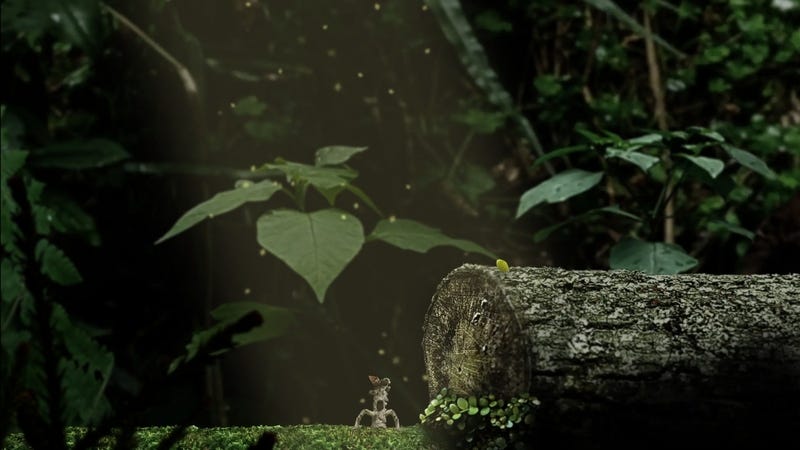
We start in a native New Zealand forest, explored by our seed protagonist (radioactive thanks to a meteorite, for the curious) using its noble ability to roll. In the photo right below you can admire it in all its majestically tiny glory, perched on a log and staring into the distance. And the scenery has a shameless beauty for a simple reason: every environment (they’re very proud of this, as they mention it pretty much everywhere) was built from real photos and videos.
You can almost see the humidity coating all that greenery, helped along by soft light and the kind of forest ambience that only works if you keep your voice down. So from now on, I’m writing in a whisper.
Usually in video games we’re used to playing grim-eyed heroes (in the last World Tour episode we were a biker who didn’t look anyone in the eye, not even zombie hordes). This time we’re a rolling seed with very limited mobility. But instead of rotting in the moss, we discover the seed can possess little creatures made of bark (I think they’re made of bark, at least), each with its own ability to jump, move, or launch.
“Launch” meaning each creature can shoot us in different directions and to different heights, letting us overcome the natural obstacles in our way.
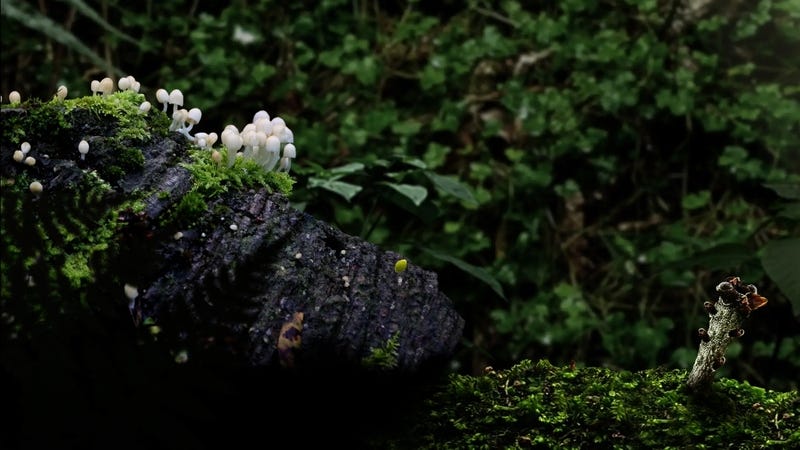
After all, if you’re seed-sized, every log, leaf, or stone becomes a piece of architecture. A fallen trunk turns into a highway, a cluster of mushrooms is a skyline, and a puddle becomes an endless sea. The puzzles lean into this shift in scale, and they make one survival rule painfully clear: when you’re tiny, everything is a threat.
The creatures couldn’t care less about whoever insists on calling themselves “the protagonist.” Big nasty birds, insects, butterflies… no, butterflies don’t hurt anyone. But aside from the butterflies, we’re closer to snack than hero. And when we finally learn how to move through the forest’s dangers, everything changes.


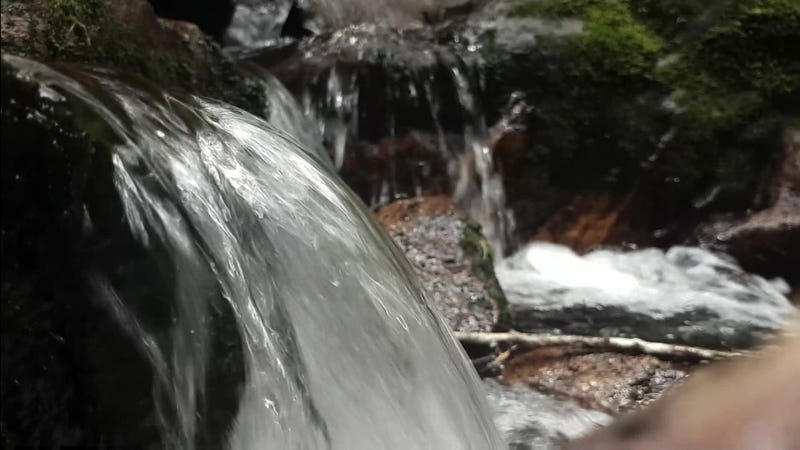
The setting shifts subtly: from the dense, soft depths of the forest to brighter clearings with streams and rocky stretches. It’s still New Zealand, still photorealistic, but the forest opens up, making room for a different landscape and a different mood.
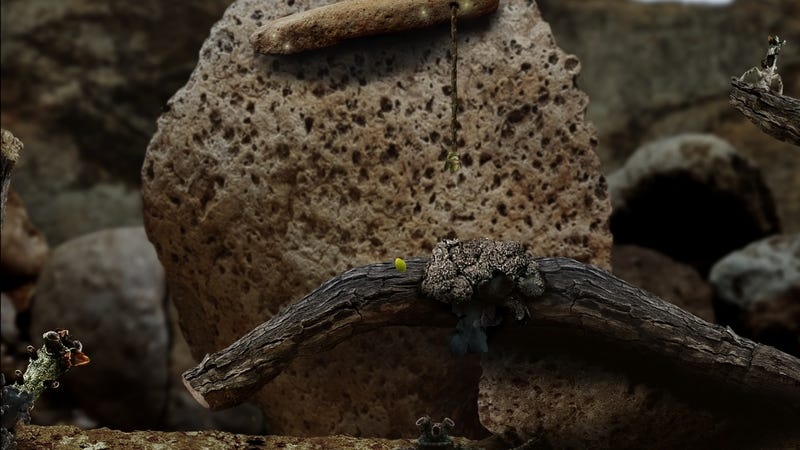
What looks like a simple new area hides a terrible danger: a human. Because of course, if sentient seeds show up on Earth, humans can’t just stand there and watch. We have to understand it. Immediately. That’s how we’re built. And then the real obstacle arrives: the human, also known as The Boot.
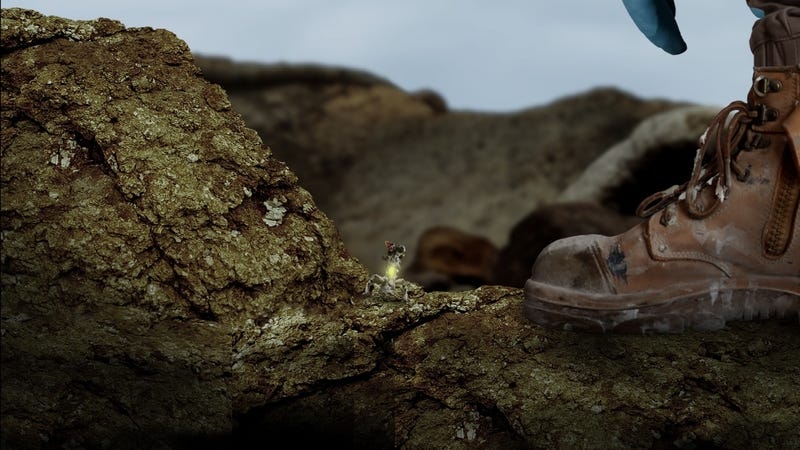
A heavy presence. Then: capture. Then the lab. The game never turns into full-on lab horror, with Resident Evil-style experiments. We learn humans are curious, but they still don’t understand a thing about us. We get locked inside a plastic container (the kind you’d stash leftovers in) and paraded at a conference. We’re basically a circus act.


The jump from the New Zealand forest to a world of sterile surfaces, labels, and masks is a great plot twist. We’ve spent over an hour learning the sounds and spaces of nature, and now everything feels alien. Even though, technically, we’re the aliens.
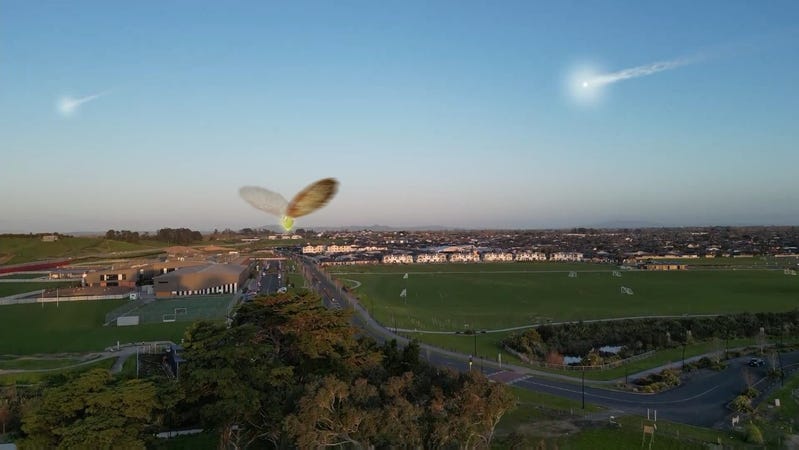
Maybe that’s why the cavalry doesn’t arrive on horseback. It arrives as another meteorite. The impact shakes everything, pops the lid on our container, and gives us our escape. That’s the finale kicking in.
We lift off above Hamilton, seeing the city from up high (after some truly unnecessary research, I’m pretty sure we’re looking at Korikori Park). And then we spot more meteorites streaking across the sky. Is it an invasion? Here it feels more like new friends showing up.
Bardsley Creative (2023) Seedlings [Video game] [2D puzzle-platformer] [2 hours] (Windows) [macOS] Bardsley Creative.
My last two coins
There’s a kind of arrogance that’s uniquely human. We walk through forests and tell ourselves we love nature, but we struggle to grasp proportions. The forest is immense and surrounds us, while its inhabitants are sometimes tiny, almost invisible. Holding such different scales in our heads at the same time isn’t easy. You can see it when we step on an ant, or clear-cut an acre of woodland, then obsessively manicure our garden with surgical care. We’re a strange species of animal.
Seedlings makes you realize how loud we are, how heavy we are, how convinced we are that everything exists to be understood, owned, improved, or at least explained.
Maybe that’s what travel should do, when it truly works: shrink us a little. Not physically (though airlines would be thrilled), but mentally. Make us less certain. Less central. Less convinced we’re the protagonists of every ecosystem we step into. Sooner or later, we’ll get there. Until the next episode, ciao!