

Welcome back to Artcade, the souvenir lost at the bottom of your backpack and found two months after the trip, when no one remembers buying a butt-shaped fridge magnet with I LOVE [add the name of the last city you visited] written on it. Today we’re leaving for a place we’ve seen a thousand times without ever really being there, because it has filtered into our heads through manga, movies, prints, video games, cherry blossoms, samurai, haiku, and cheap instant ramen: Japan. And since we don’t like simple things, today we’ll explore it through one artist’s eyes and see how that particular perspective shows up in a newly released game. In a way, it’s as if the World Tour series were meeting a classic Artcade episode… aren’t you already vibrating with excitement? Enjoy the read!
Japan knows how to change gears: we think of it through cherry blossoms and also through a giant lizard named Godzilla. If we see a ninja: Japan. A clean public restroom: Japan. In short, Japan has exported quite a few images that have colonized the global imagination, but one in particular has reached an almost supernatural level of fame: The Great Wave off Kanagawa.
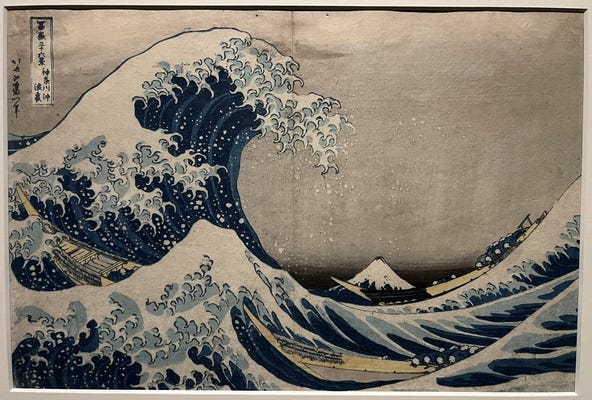
Katsushika Hokusai (ca. 1830-1833) The Great Wave off Kanagawa [神奈川沖浪裏] [Woodblock print] [Ukiyo-e] [Ink and color on paper] copies held in several museums
We’ve seen The Great Wave in every possible form, from mugs to tattoos, along with a whole series of parodies printed on every available surface. It’s such a famous work that, to really look at it, you first have to move a mountain of merchandise out of the way. And speaking of mountains… In The Great Wave, Hokusai hid Japan’s most immovable symbol inside a frame where everything moves, making it look like a detail. But Mount Fuji is more important than it seems: the work is part of a series called Thirty-six Views of Mount Fuji.
We could describe these thirty-six views as a kind of tour of Japan with Fuji as the recurring guest star. Sometimes huge, sometimes tiny, sometimes crystal clear, sometimes almost hidden: Mount Fuji photobombing.
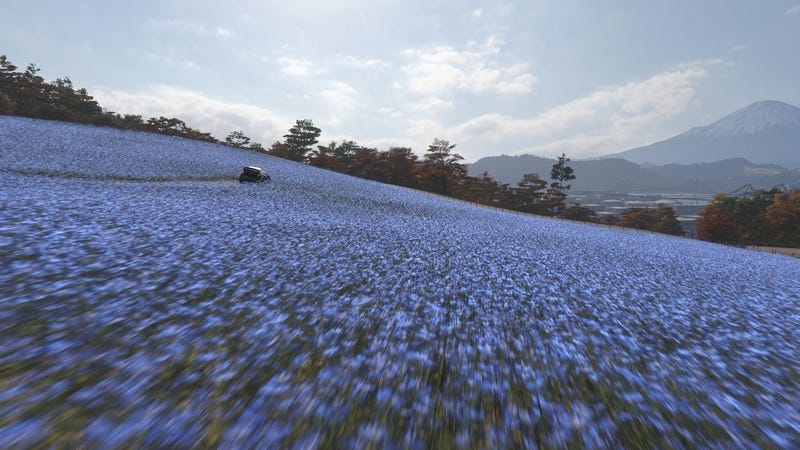
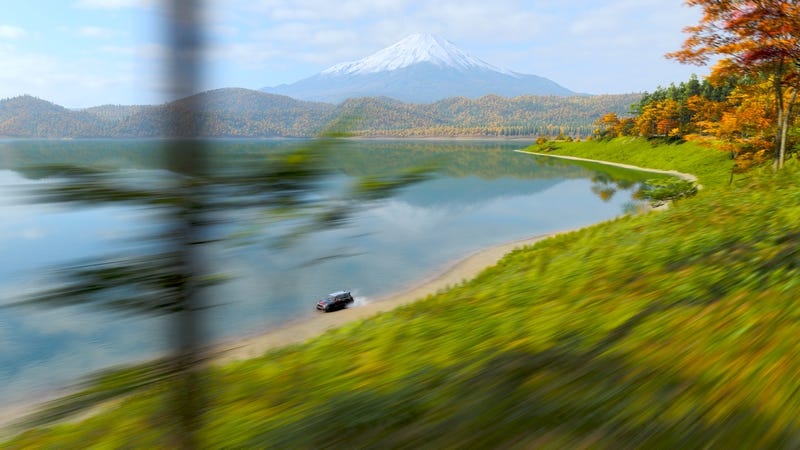
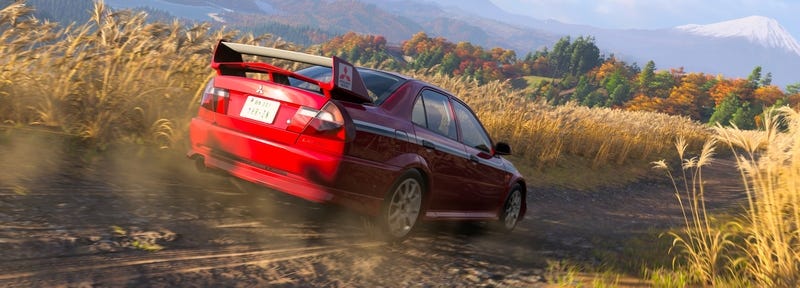
Forza Horizon is a racing game. And, really, that’s all you need to understand what kind of game we’re talking about. In the new entry in the series, the Horizon Festival arrives in Japan, and Mount Fuji immediately becomes a magnetic presence: while we race through the countryside in an off-road vehicle or through the alleys of Tokyo at night, just like in Hokusai’s works, Mount Fuji is our point of reference. It gives the eye a center.
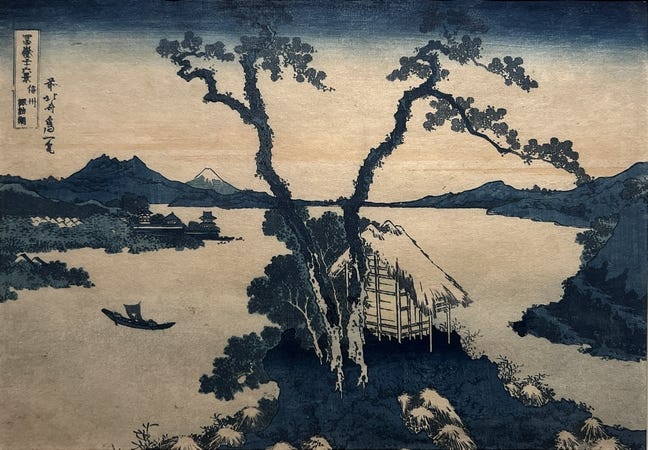
Katsushika Hokusai (early 1831) Hut On Suwa Lake, Shinano [Woodblock print] [Ukiyo-e] [Ink and color on paper] National Museum in Kraków
In Hut On Suwa Lake, for example, Fuji peeks out in the distance while life goes on. Someone is probably thinking about what to cook for dinner, a question that, throughout human history, has always carried more weight than most philosophical disputes.
This happens all the time in Thirty-six Views: Fuji watches, like a sacred element of the landscape, but it doesn’t make a fuss about it
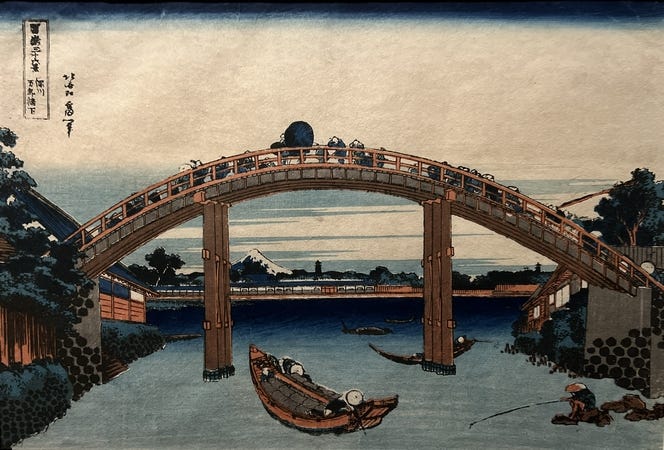
Katsushika Hokusai (ca. 1832) Fuji Under Mannen Bridge On The Fuku River in Fukagawa, Edo [Woodblock print] [Ukiyo-e] [Ink and color on paper] National Museum in Kraków
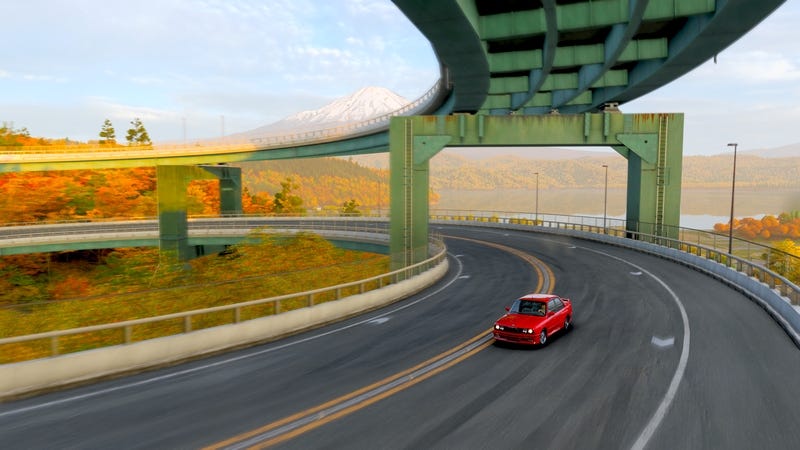
In Forza Horizon 6 as the seasons change, the same road can become a different work: autumn leaves, snow, spring, fields, sunset or dawn light, different sounds, a different atmosphere. It’s not unusual to lose a race because you were too busy looking at the scenery.
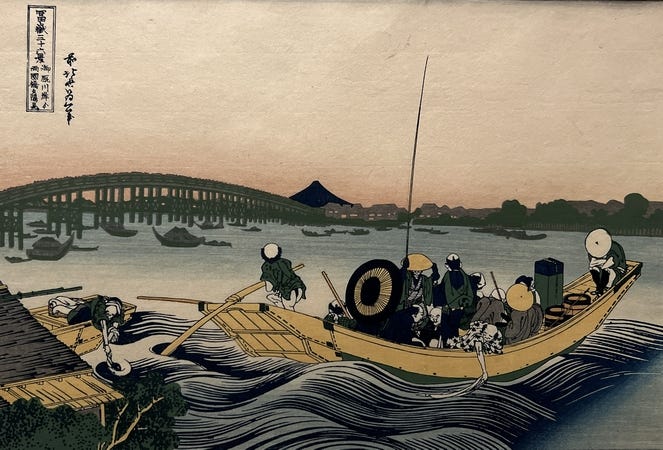
Katsushika Hokusai (first edition ca. 1831) Viewing Sunset over Ryōgoku Bridge from the Onmayagashi Riverside [Woodblock print] [Ukiyo-e] [Ink and color on paper] National Museum in Kraków
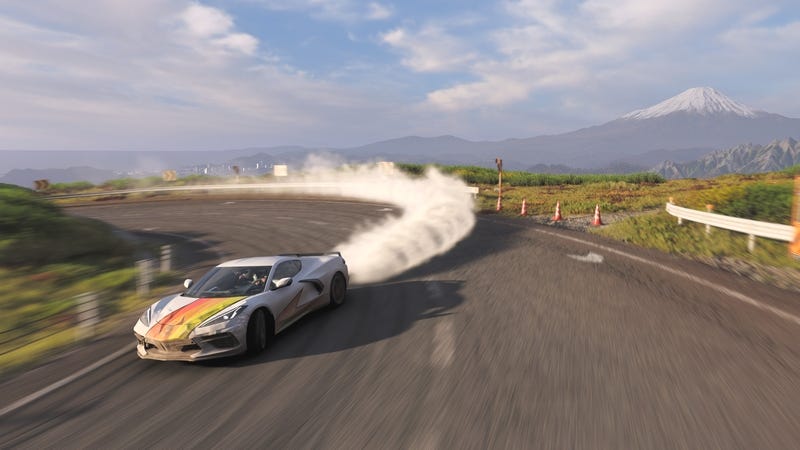
The developers also seem to understand Mount Fuji’s function very well. They place it in the screens that support the game’s structure. Very different moments, all marked by the same presence.
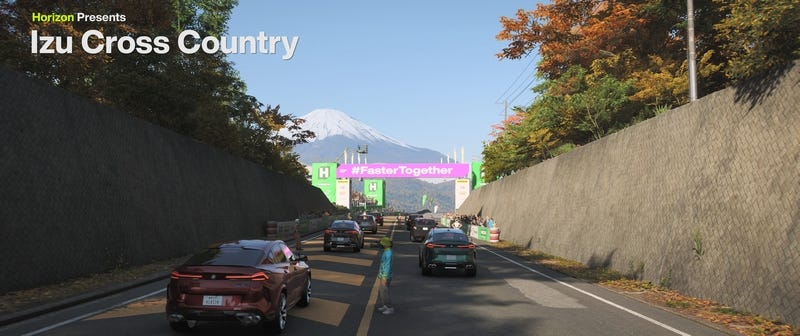
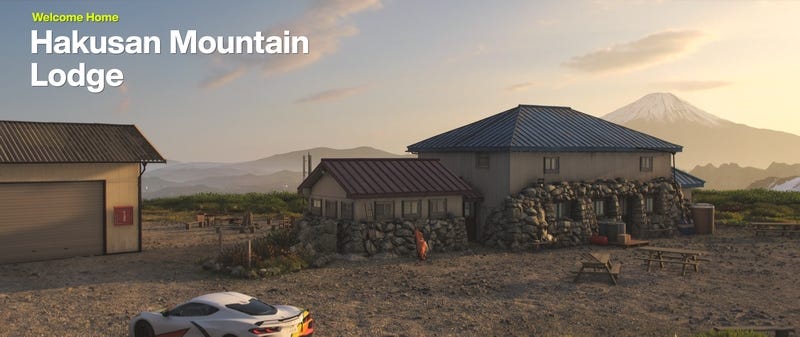
As if Mount Fuji were the punctuation holding up a story.
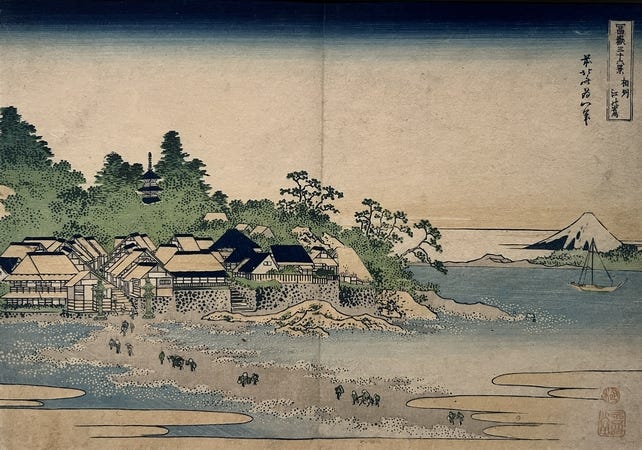
Katsushika Hokusai (ca. 1831) Enoshima Island, Sagami [Woodblock print] [Ukiyo-e] [Ink and color on paper] National Museum in Kraków
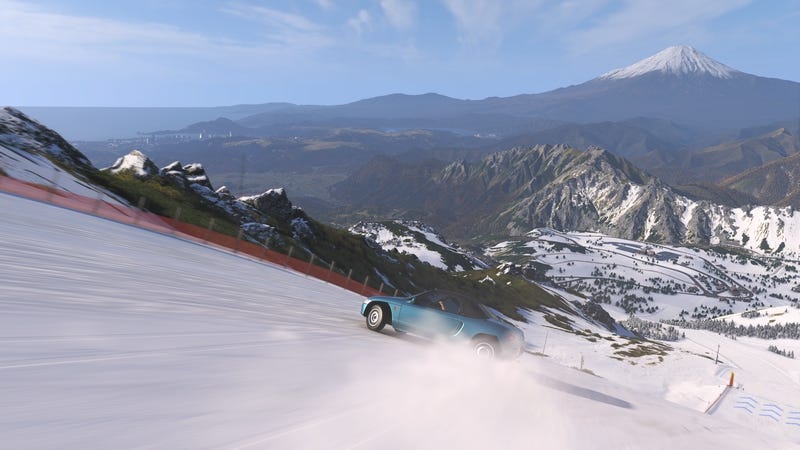
Forza Horizon, someone might point out, behaves toward geography like a child left alone in a room full of toys: it wants to touch everything.
Everything is very close. You can go from a snowy mountain road to the coast in an instant, the cars are extremely fast and indestructible, and we, being mature and responsible people, cross it all at ridiculous speed.
Hokusai, after all, was obsessed with movement too. In The Great Wave, there’s the sea. In View of Mount Fuji from Hongan-ji Temple, there is a kite.
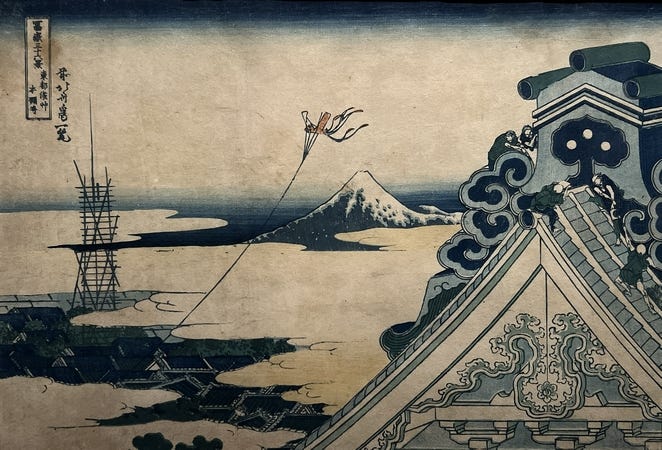
Katsushika Hokusai (ca. 1831) View of Fuji from Hongan-ji Temple in Asakusa, Edo [Woodblock print] [Ukiyo-e] [Ink and color on paper] National Museum in Kraków
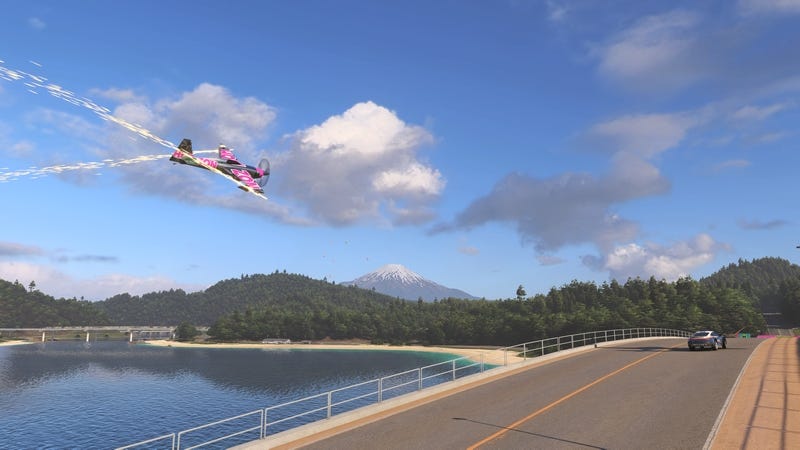
Where Hokusai puts a kite in the sky, the game can throw in a plane. But we can also fly with our car. Forza Horizon lets us take off thanks to ramps placed exactly where they need to be. And when we snap a photo of our battered car, capturing moments that are either poetic or wonderfully tacky, there it is again in the background: Mount Fuji. Our travel companion.
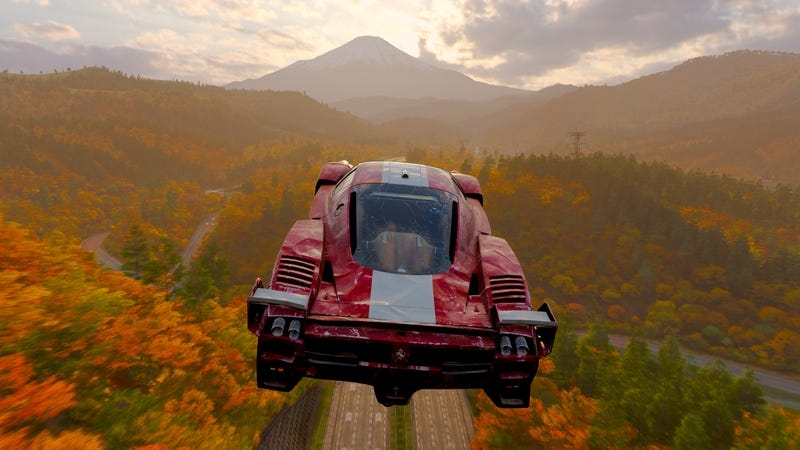
Playground Games (2026) Forza Horizon 6 [Video game] [Open-world racing] [26½ hours] (Xbox Series X) [Xbox Series S, Windows] Xbox Game Studios
My last two coins
Thirty-six Views of Mount Fuji. Isn’t that a beautiful title? As often happens with beautiful titles, it’s a bit of a liar. In the end, there were forty-six views: the first thirty-six were successful, and ten more were added. Edo-period DLC, basically. Except instead of new skins and side missions, you got a nice little pack of new woodblock prints. Every era has its own little indulgences.
Until the next episode, ciao!
Just like where I live in Ngāmotu New Plymouth, in New Zealand. Taranaki Maunga is always there in the background.
It was the stand-in for Mt Fuji when they filmed Last Samurai here.