

Welcome back to Artcade, the empty space left behind after someone helped you remove the furniture, the rugs, the paintings, and even that hideous little ornament nobody had the courage to throw away. What’s left? Usually dust. But sometimes, if we’re lucky, there’s also something to listen to. Enjoy!
Before we begin, let’s put on György Ligeti’s Sonata for Solo Cello. The first movement is called Dialogo, which is already a tiny joke: there’s only one instrument, and yet the title promises a conversation. Who is it talking to? Itself? The listener? A second cello that missed its train? Actually, I think it’s talking to silence. So, to get straight to today’s topic without too much throat-clearing, it might be a dialogue with empty space.
I can take any empty space and call it a bare stage. A man walks across this empty space whilst someone else is watching him, and this is all that is needed for an act of theatre to be engaged.
That is how Peter Brook begins The Empty Space. He strips theater of everything and proves that even without a red curtain, without chandeliers, without actors delivering speeches while clutching a skull, theater survives. All you need is a space, a body crossing it, and someone watching.
And he does this without turning it into three chairs and one sad spotlight pretending to be minimalism. Brook explains that theater does not need accumulation. It needs relation. Someone does something. Someone else watches. And in this way, space becomes a question: what is happening? Put like that, Brook’s idea of theater becomes clear: a question created between actor and spectator. And a question is much more interesting than a chandelier or a beautiful set.
Then Brook introduces the concept of Deadly Theatre. Deadly as in embalmed, polite, respectable, with folded hands and all the vitality of bureaucracy.
Deadliness always brings us back to repetition: the deadly director uses old formulae, old methods, old jokes, old effects, stock beginnings to scenes, stock ends […]. A deadly director is a director who brings no challenge to the conditioned reflexes that every department must contain.
Repetition, in itself, is not the problem. Music is based on repetition. Theater rehearses, rehearses again, makes mistakes, starts over, insists, sweats, takes a bow, and begins again. Life, if we’re being honest, is an endless cycle of laundry.
The problem begins when repetition stops being practice and becomes a conditioned reflex. When, instead of searching for something, the actor has become material for a Pavlov experiment. Raise your hand if you’ve never repeated a joke only because it once made someone laugh. For Brook, Deadly Theatre dies because it repeats without thinking: it is as if it already knows everything before anything has even happened. Which is very convenient, true, but also a very elegant form of death.
Truth in the theatre is always on the move.
First there is emptiness, then repetition, and finally presence. Emptiness is the space for action. Repetition risks killing it, but it can also sharpen it. Presence saves it, because it prevents the gesture from becoming just something already seen. In theater, as in all the tired afternoons we drag ourselves through, the problem is not doing something new, but being truly present while doing the same old things.
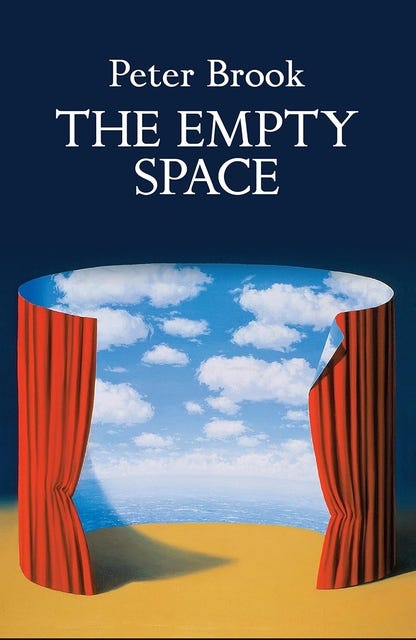
Peter Brook (2019) [1968] The Empty Space [Essay] Nick Hern Books Limited
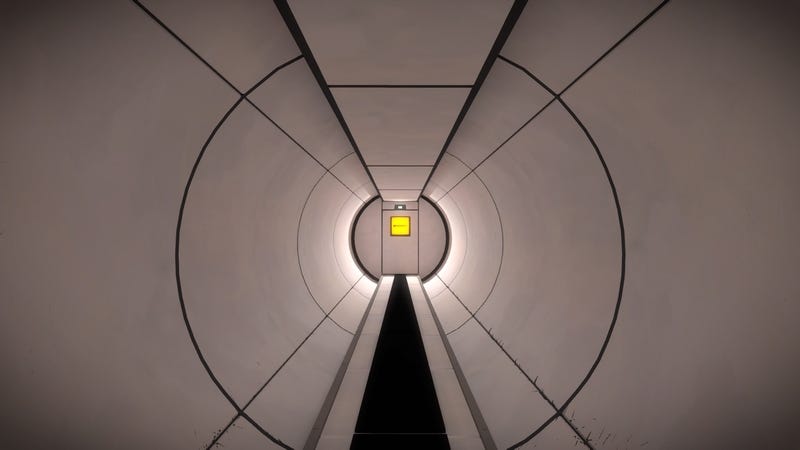
At the beginning of The Witness, we wake up in a tunnel. We don’t know who we are, we don’t know where we are, we don’t know why we’re there. On the upside, in front of us there’s a yellow panel with a line to draw. An elegant way to let us know that nothing will be explained.
Once we leave the tunnel, we find ourselves on an island. Colorful, silent, arranged with almost suspicious precision. Even the trees seem to make sense.
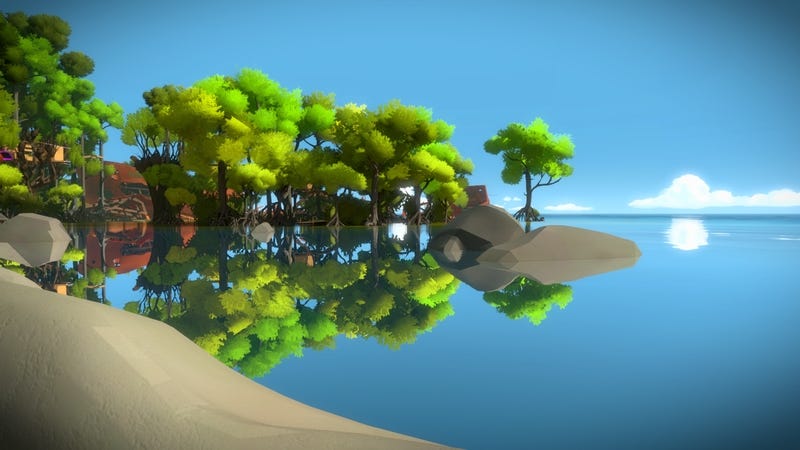
Nobody runs up to us yelling for help. We don’t have a diary full of objectives or an inventory with three differently colored keys. There is silence. There is space. And we cross it.
The emptiness of The Witness is a wonder. A game without dialogue, missions, tutorials, constant rewards, or characters counting on us to save the world, even though we don’t even know how to open a door.
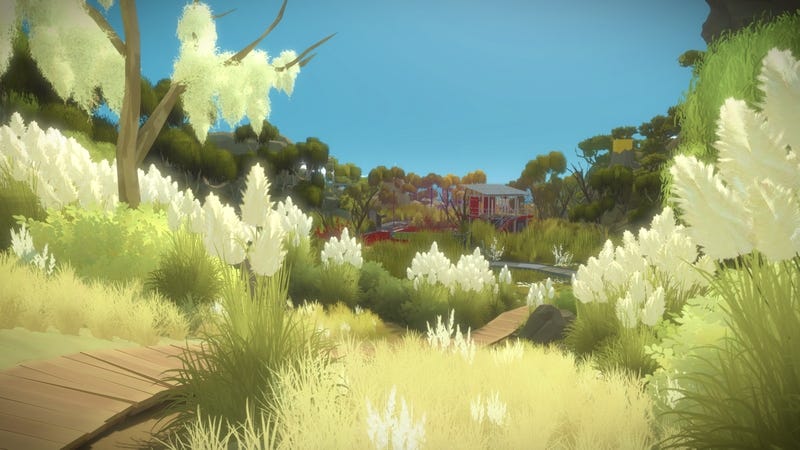
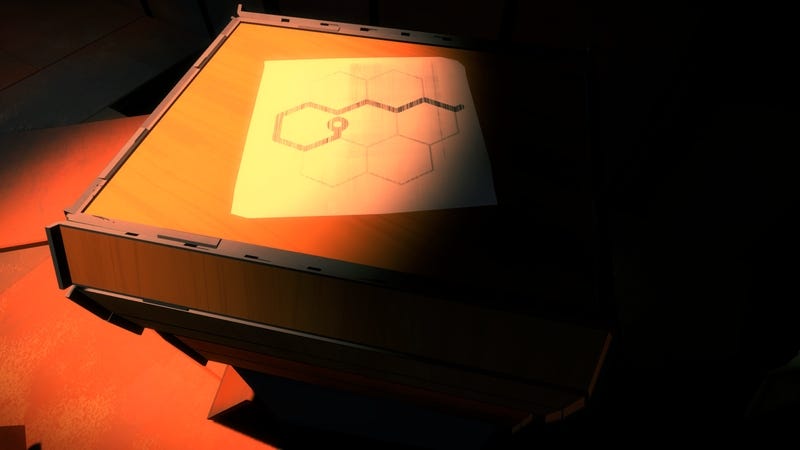
The island is full of panels. On each panel, you have to draw a line from a starting point to an endpoint, following a rule that is intuitive at first. Then less so. Then even less so. Then you spend minutes staring at a grid as if it contained the encrypted will of a distant rich relative.
Here comes repetition. Always the same action: drawing a line. Again. Again. Again. The risk of Deadly Theatre is right around the corner, dressed up as a puzzle game: old formulas, old tricks, old ways of beginning and ending a scene or in this case a grid. But The Witness never lets the gesture become mechanical. The moment the player thinks they know where to sit, the game comes up from behind and moves the chair.
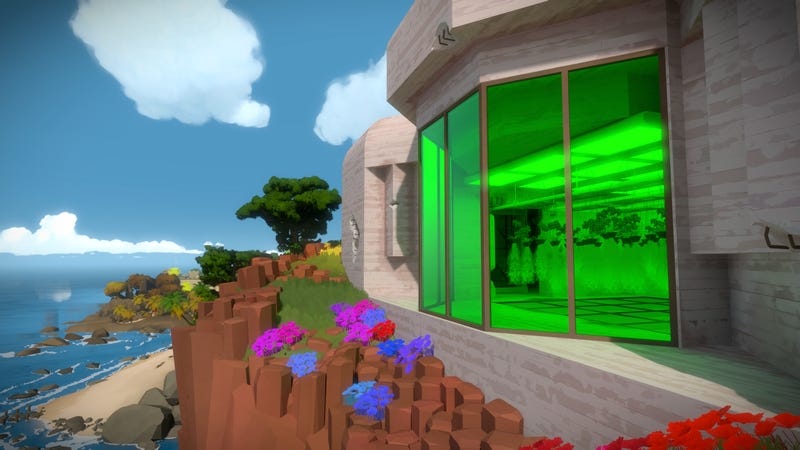
The most interesting thing about The Witness is that it teaches without explaining. Every area of the island introduces a grammar: it may be based on symmetry or colors, on shadows or separations, on sounds, on shapes. And every time, without having to read a single line of text, we learn to speak the language of the panels.
Every grid we encounter refuses to be solved if we use only what we learned in the previous one. No conditioned reflexes. If a rule becomes automatic, it is no longer enough.
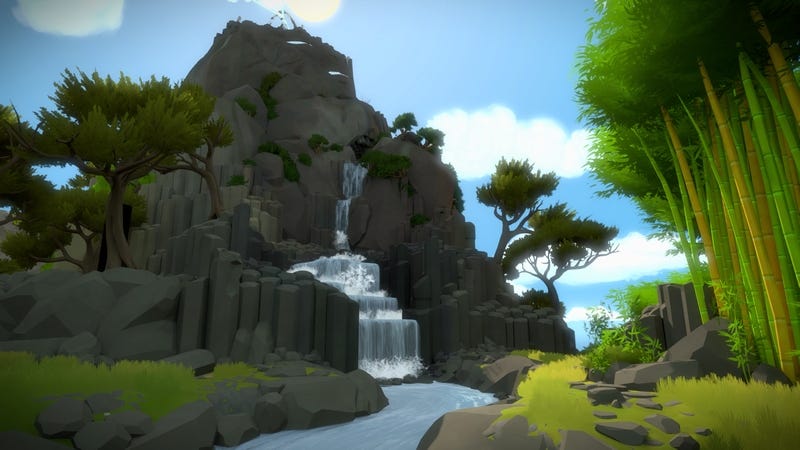
I don’t think I can put into words how close The Witness comes to my purest idea of a masterpiece. Of course, you need a patient, curious eye, one that does not make haste, or shooting enemies, its personal creed. The Witness is paradise for people who go to the beach and like doing crossword puzzles, not for those who rush off to smack a ball around at the water’s edge. For those blessed with this spirit, little by little the game opens up, and you start seeing lines everywhere. Even in tree branches or in the outline of a cloud. The entire island becomes a puzzle.
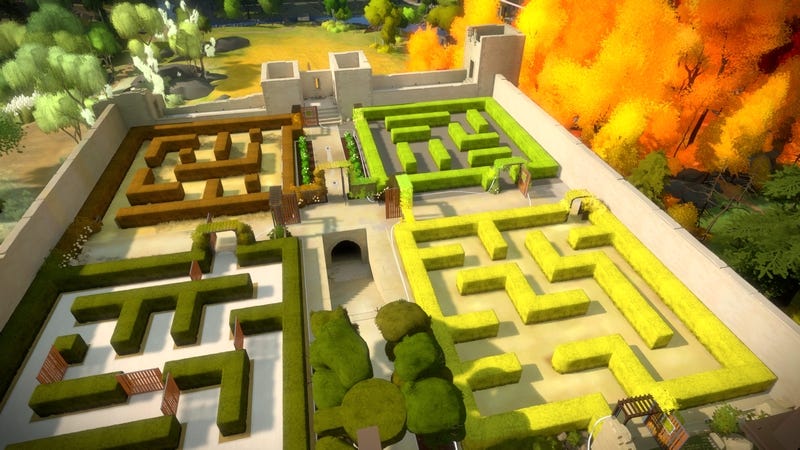
The Witness is not a hero, a chosen one, a savior with a sword twice his size. Truth is always on the move. The witness has seen, has played, and now knows.
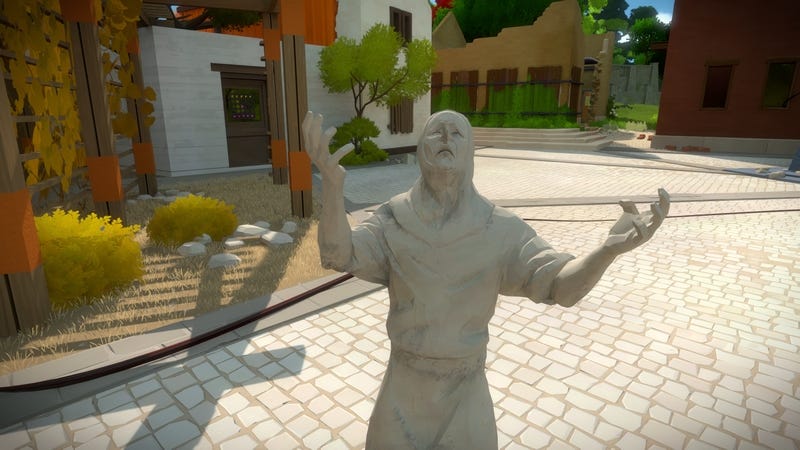
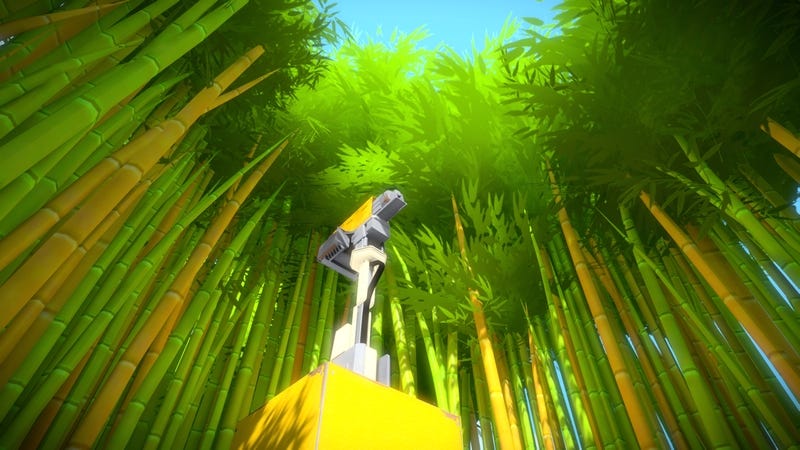
Jonathan Blow (2016) The Witness [Video game] [Puzzle] [17 hours] (Xbox Series X) [Windows, PlayStation 4/5, Xbox One/Series S, macOS, iOS] Thekla, Inc.
Information Desk:
Sure, Jonathan Blow is the brilliant mind behind The Witness. But he is not the only person who contributed significantly to its success. The game’s gorgeous aesthetic is the result of a team effort, and on the site linked here you can discover, through the words of Luis Antonio, one of the people who worked on it, how the aesthetic fused perfectly with the game.
We said that the first movement of Ligeti’s Sonata for Solo Cello is titled Dialogo. And the second movement? Capriccio. And the title delivers exactly what it promises.
My last two coins
I like empty space. It feels full of possibilities. For example
.
.
.
.
.
So many things I could have written in this space. I’ll leave it to you, so you can use it for something you’ve been meaning to think about for some time. This is the empty space for doing that.
See you next episode, ciao!