

Welcome back to Artcade, the kind of nothing you end up growing strangely attached to. We usually think of emptiness as something negative, as if it were the absence of something that ought to be there. But emptiness is beautiful. It gives shape to vases and glasses, makes Emmental cheese charming, and makes us happy when we’re looking for a place to park the car. Today we’re talking about subtraction, about moving soil around, about gestures so unusual they look like mistakes. And yet, sometimes, they become monuments. Enjoy the read!
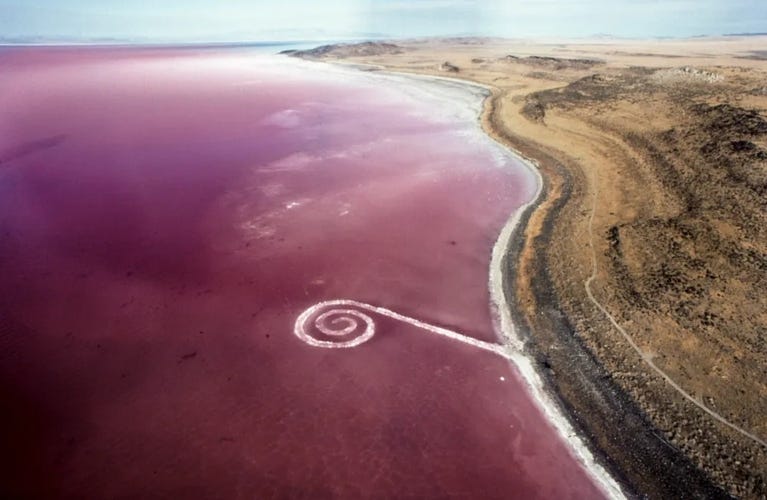
In 1970 Robert Smithson decided that the Great Salt Lake needed a spiral. He traveled to Utah and built one out of rock and earth, about 450 meters long, curling into the pinkish water like some prehistoric fossil. The work is called Spiral Jetty, and it doesn’t hang on a wall like a painting; you can’t wait for it to show up in an exhibition somewhere near where you live. You actually have to travel to see it and contemplate the piece within the landscape itself. Land art often works this way: it reorganizes matter already present in the environment, shifts it around, makes the landscape aware of its own shape. In doing so, it changes the way we read a space.


Robert Smithson (1970) Spiral Jetty [Land Art] [Earthwork] [Basalt rocks, soil, salt crystals] Great Salt Lake, Utah
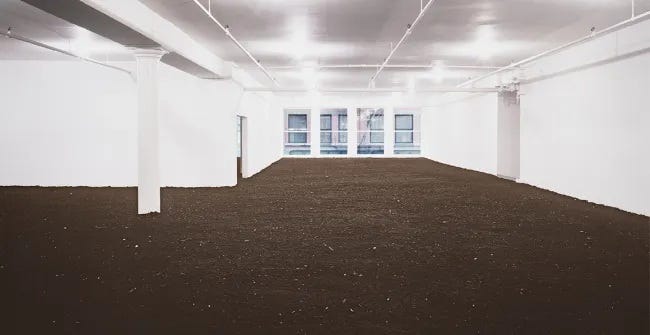
Walter De Maria does something different, while still staying close to the principles of land art. New York Earth Room is a loft filled with soil. Put that way, it sounds like a construction company’s mistake, but the white walls, the controlled lighting, and the interior that smells faintly of damp earth bring matter back to the center of the experience, as if the room had returned to a primordial state. The idea is to make us feel like temporary guests on a planet much older than we are. I’m not entirely convinced it succeeds—unfortunately I haven’t had the chance to visit it yet—but I do love the intercom you have to ring just to be let in.


Walter De Maria (1977) New York Earth Room [Permanent installation] [Indoor earthwork] [250 cubic yards of soil] Dia Art Foundation, New York
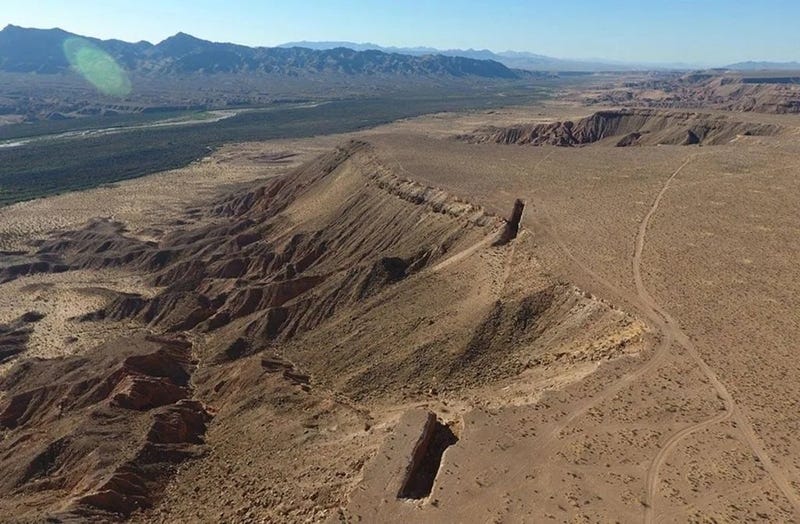
So far we’ve seen artists use materials to change a landscape—or even a house. Michael Heizer takes things a step further and chooses subtraction instead. In 1969 he dug two enormous trenches in the Nevada desert and titled the work Double Negative. No sculpture, just the void left behind after 240,000 tons of rock were removed to create a space that didn’t exist before. Traditional monuments accumulate; Heizer removes, carving his decision into the earth. The sculpture is the space left behind.


Michael Heizer (1969) Double Negative [Land Art] [Earthwork] [Excavated rock in the desert] Mormon Mesa, Nevada
If you’ve been reading Artcade for a while, you know this is the moment when a video game enters the picture. But which video game could possibly connect with land art? Wouldn’t it require a landscape, soil, some kind of physical contact with the land? There is a game much closer to all of this than you might think. I’m talking about:
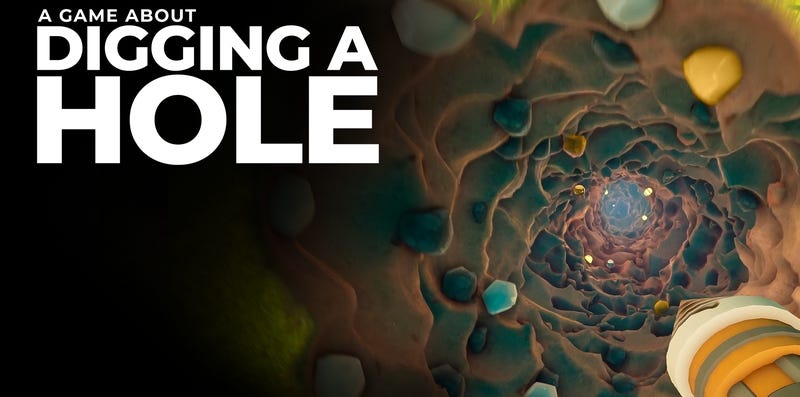
A Game About Digging a Hole has an extremely simple narrative premise. A small truck pulls up and posts a flyer on a notice board.
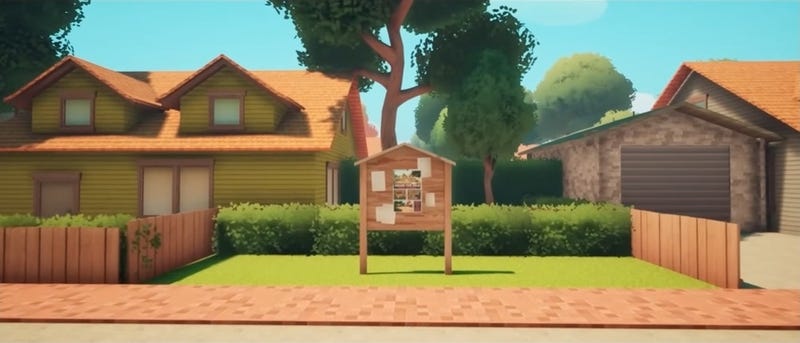
Curious, we go check it out and discover we’re about to make the deal of a lifetime.


A house for sale for ten thousand dollars. And that’s not all: there’s treasure buried in the backyard. Naturally, we buy it.
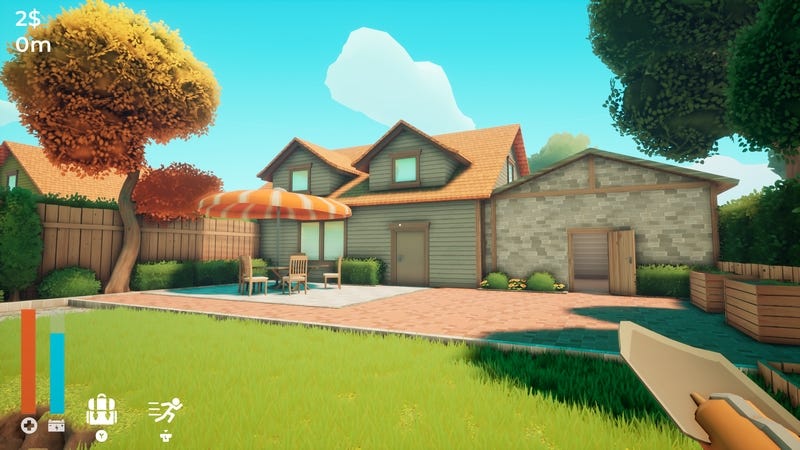
Not a bad little house. And in the yard there’s an X drawn on the grass. Armed with a strange motorized shovel (included with the house), we start digging.
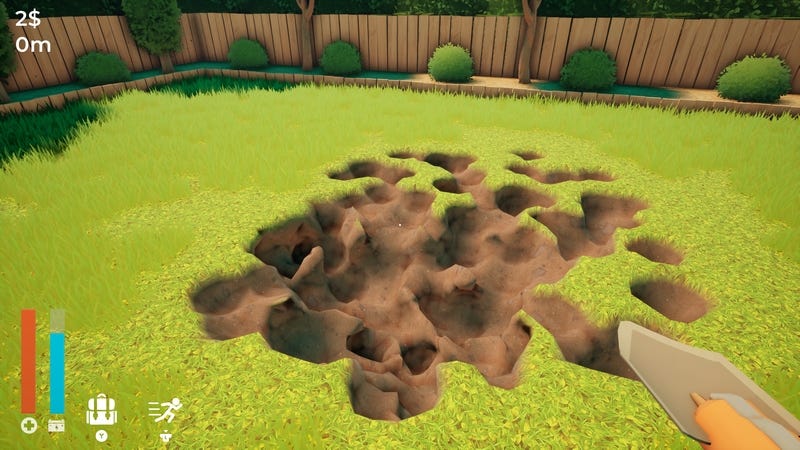
A Game About Digging a Hole delivers exactly what its title promises: a patch of land to dig. No epic quest and no princess to rescue like in your typical Super Mario game. Here you simply press a button and make a bit of earth disappear. It hardly matters if, especially with the more advanced models, our electric shovel ends up looking more like a vacuum cleaner than the tool it’s supposed to represent.
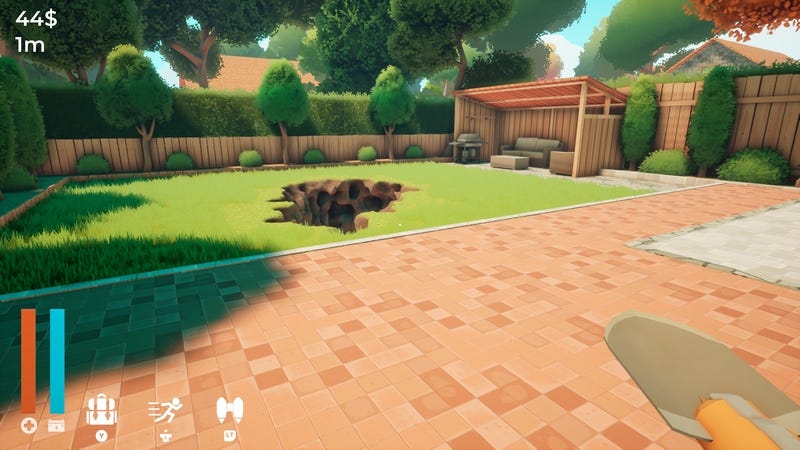
Repeat it enough times and the act of digging becomes a mantra—a form of concentration and, later in the game, something close to stubborn meditation. As in the land art piece Double Negative, we intervene in the landscape by removing material, and progress is measured by the depth we reach. The hole grows, and the world above slowly drifts away.
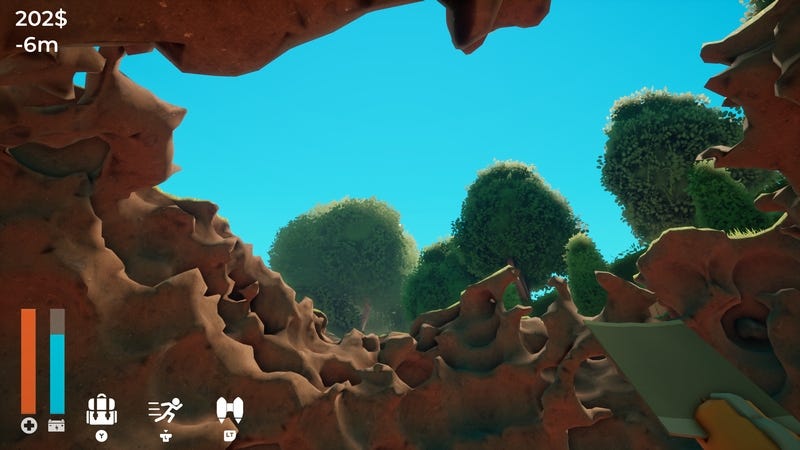
Like all pleasant, hypnotic, and slightly pointless activities (none come to mind right now), it’s easy to get carried away. You keep digging longer than necessary, just to see what this mystery might be hiding, if it’s really a mystery at all.


Is there actually treasure? How deep can I dig? Those questions reminded me I was playing a game. The answers satisfied me, up to a point, not because they were disappointing; on the contrary, for a game that lasts about two hours everything feels very well put together. But the truth is something else. The truth is that I just wanted to keep digging.
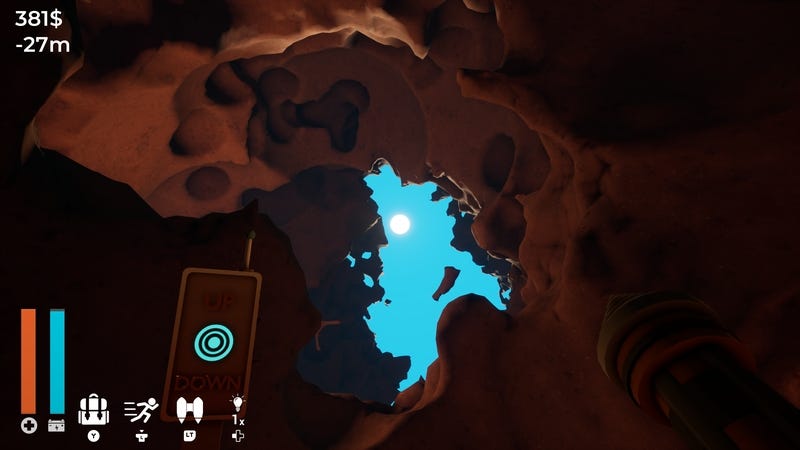
Cyberwave (2025) A Game About Digging a Hole [Video Game] [Simulation] [2 hours] (Xbox Series X) [Windows, Xbox Series S, iOS, Android, Nintendo Switch] rokaplay Bou·tique, Drillhounds
Information Desk:
If you’re curious how far land art can go, take a look at The Lightning Field by Walter De Maria. It’s a rectangular field measuring one mile on one side and one kilometer on the other, with 400 steel poles arranged across it. Or perhaps you’d rather visit it in person.
What if the real enemy in A Game About Digging a Hole were the real estate agent? Contains spoilers.
And if you’re curious to see how Spiral Jetty was built, there’s a clip on YouTube from the film Robert Smithson himself made about the project.
My last two coins
We’re used to thinking about ambition in vertical terms: towers, rankings, numbers that keep climbing higher. Yet many of the most radical gestures we can make point downward. Archaeologists dig to understand the past, psychologists dig to explore our inner lives, drills dig to extract resources, and algorithms dig to uncover our desires. Rising upward often means leaving a place behind, escaping from where we are. Digging, on the other hand, means going deeper, staying present, leaving a mark. In other words, digging means changing the world and leaving your trace behind. Maybe that’s why a simple digital hole can become so meaningful. I’m going back to digging. See you in the next episode, ciao!