

Welcome back to Artcade, the real estate agency that renovates your home overnight and sends the notary, the surveyor, and the land registry office into total paranoia. A house is supposed to be a stable place. A place with walls, windows, clearly defined rooms and maybe a drawer where dead batteries, old remotes and expired warranties for appliances we no longer own all go to die. And yet there are houses that don’t behave in very reassuring ways. Today we’ll look at two of them, but keep an eye on the one you live in too. You never know. Sometimes houses decide not to cooperate. Enjoy the read!
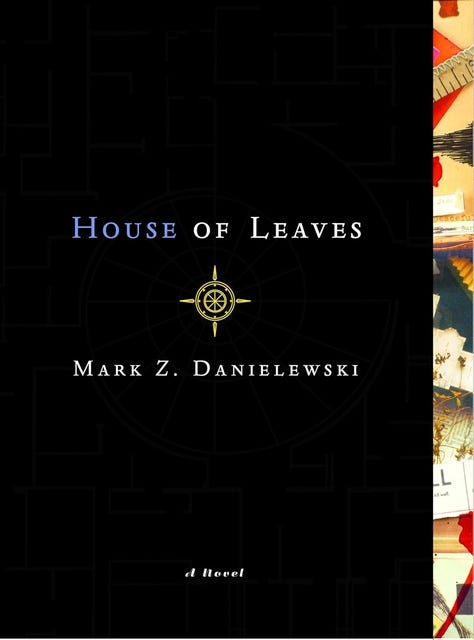
House of Leaves by Mark Z. Danielewski begins with a sentence written on a blank page:
This is not for you.
Obviously, it’s a trap. It feels like one of those ads that say “Don’t read below,” or those little mental tricks like “Don’t think of an elephant.” And after that first trick, the book pulls off so many others in a row that the reader starts to wonder whether the problem is them. It’s a novel, an essay, an archive, a typographical labyrinth, a house haunted by incorrect measurements.
Telling the book in a linear way would already mean betraying it, so we’ll proceed carefully, like when you get up at night to go to the bathroom without turning on the light. Spoiler: your little toe is going to suffer.
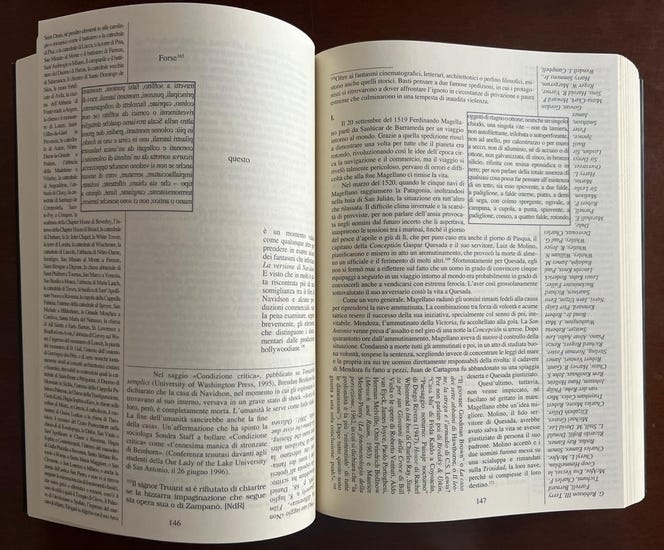
The plot is a labyrinth: Johnny Truant moves into a house and finds the papers of an elderly blind man who was writing an essay about a documentary in which the Navidson family recounts the investigations the Navidsons themselves carried out on the house. Clear, right?
The house does in fact have a few anomalies: the inside is bigger than the outside, for example. But the strangest thing is perhaps the corridor that appears at a certain point, called the “Five and a Half Minute Hallway.”
If a corridor that long appeared in my house, leading to other empty rooms (and dark ones too, but you can’t have everything), I’d be happy. Finally, a study! That would be my first thought. Finally, a place to dump all my stuff. But if the corridor starts appearing wherever it likes, if it keeps getting bigger, then no, then we have a problem.
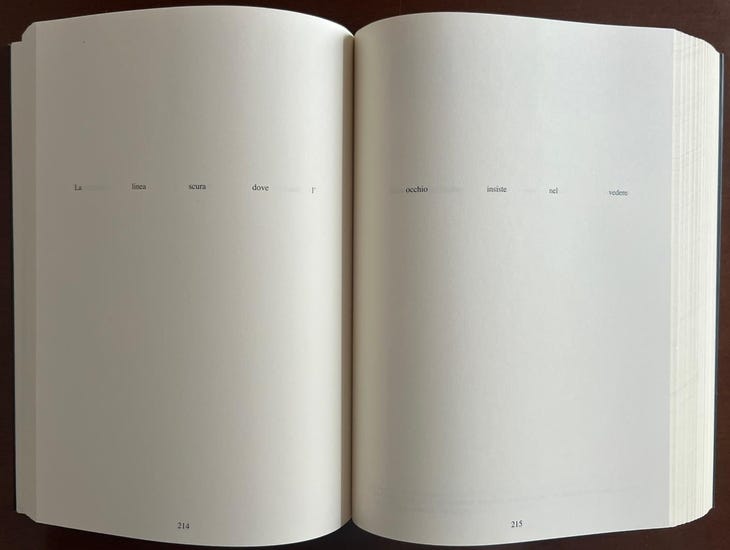
What’s astonishing about House of Leaves is the way the impossibility of what it tells becomes real on the page: as we read a story about a labyrinth, the book itself becomes a labyrinth.
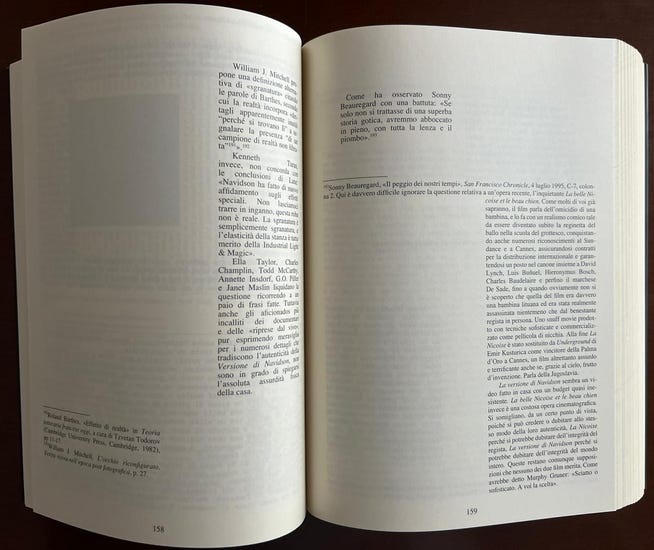
There are notes upon notes, appendices, texts inside other texts, voices chasing one another, pages that are almost empty, pages suffocated by words, lines that force you to rotate the volume. The reader can’t just sit there turning pages in order, sprawled out in the usual position of someone reading a novel on the couch. The form becomes the point, and makes us lose our bearings.
The documentary, the essay, Johnny’s story, each version only adds another interpretation and another layer of fear. Every attempt to control the house ends up expanding it. It’s information overload, a very contemporary problem.
House of Leaves ultimately becomes a frightening place for the same reason children work so well in horror: a house is supposed to be the place where we don’t need to orient ourselves. We already know where the kitchen is, even half asleep. We know how many steps separate us from the bed. We know where the corridor ends. Except this time, the corridor doesn’t end.
Mark Z. Danielewski (2000) House of Leaves [Literature] [Novel] Pantheon
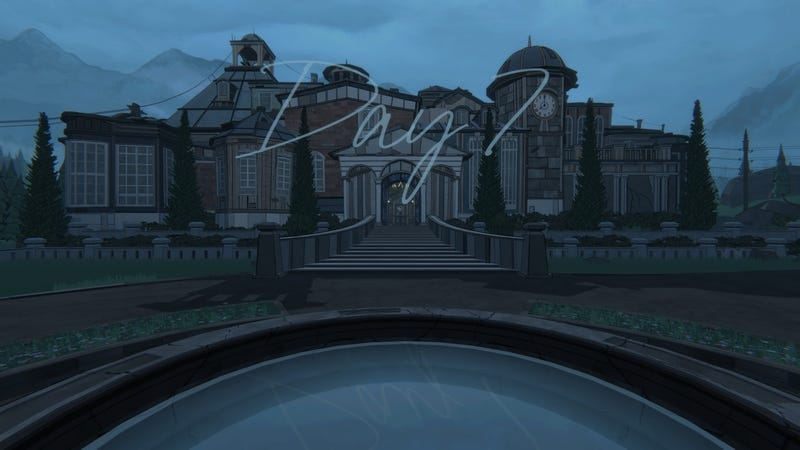
In Blue Prince, we inherit a mansion and spend every day trying to make sense of it. Inheriting a mansion sounds like a pretty good start, at least in real life. In video games, things get complicated.
To truly take possession of the estate, we have to find the mysterious Room 46. That would already be suspicious enough. Then we discover that the mansion officially has 45 rooms.
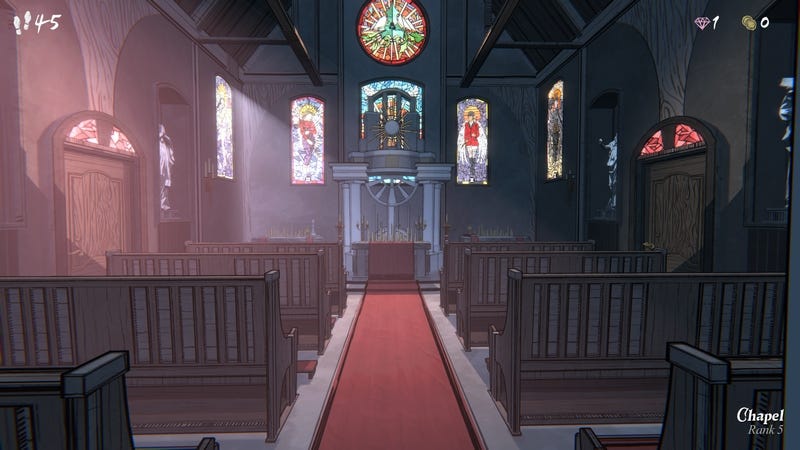
When we open a door, the game offers us three possible rooms, and we decide which one to place inside the mansion’s floor plan. A dining room? A corridor? A bedroom? A room with useful resources? A room that looks promising but will actually turn out to be a dead end? The real question is: will the unpredictable path we create lead us to Room 46?
Every choice changes the route, except the house is not a fixed text. Every day it reassembles itself while we try to reassemble the story of our ancestor. Just like in House of Leaves, the mansion here is both the setting and the narrative structure. On one side there is a building that contains more space than it should; on the other, a building that contains infinite floor plans.


The symmetries between the two works are many: both build an archive, both are packed with details that seem useless at first. On one side there is an impossible abyss, on the other an impossible system of rules. And we can study that system, exploit it, challenge it, but it will very likely end up winning.
Even in Blue Prince, where in each run we don’t so much explore the mansion as literally build it, and should therefore be in a position of power, the feeling is always that we are facing something larger than ourselves.
Explorers and architects taking notes, that’s what we are. Because there are so many things to understand, so many things to know. Every day the house resets. We, on the other hand, have one more piece of information and are always closer to the end of the corridor or to Room 46, both places that should not exist. And yet there they are.


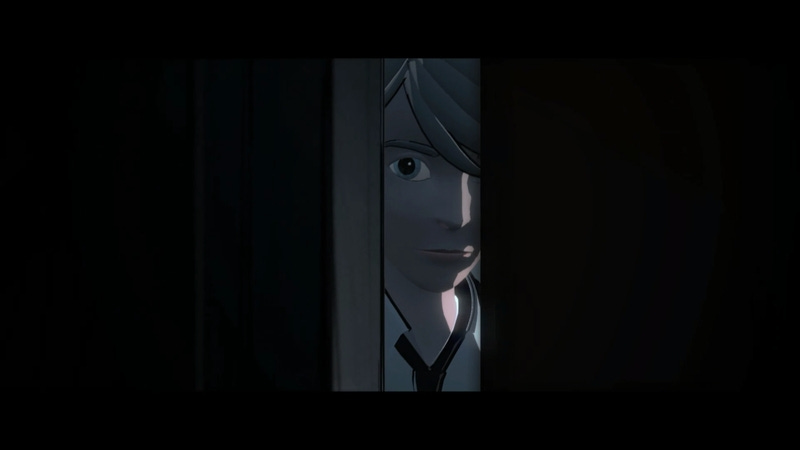
Dogubomb (2025) Blue Prince [Video game] [Puzzle] [18 hours] (Xbox Series X) [PlayStation 5, Windows, Xbox Series S, macOS, Nintendo Switch 2] Raw Fury
Information Desk:
House of Leaves is a complex book. And if a book has a reading guide on the publisher’s website, maybe that book has more floors than anyone could imagine.
Extra question: you didn’t think about the elephant, did you?
And since there’s a reading guide for the book, why not also have a guide for starting to explore Blue Prince?
My last two coins
Houses are one of our safest harbors. We take a little piece of the world, put walls around it, and say: this is mine, this makes sense, this won’t change. The pictures on the walls, the color of the furniture, the bathroom mat. We call it “stability.”
Then big things happen, good or bad, and the spell breaks. Suddenly a Room 46 appears, or an ever-longer corridor, and we no longer recognize anything. It seems to me that maybe what we love isn’t places themselves, but the habits they hold.
Until the next episode, ciao!
I loved this! I loved the parallels you drew between house of leaves and blue prince! This was such a fascinating read, and it makes me want to read the book and play the game? It's so fun to discover the parallels between interesting art.