
The Clearest Visions Come with Eyes Closed
Clair Obscur: Expedition 33 and the Symbolism of Odilon Redon

Welcome back to Artcade, where closing your eyes isn’t a sign of sleepiness but of professional discipline. Some people count sheep, some count unpaid bills, and some, like us, close their eyes and try to picture a world without anxiety. Between sleep, prophecy, and a faint background hum of panic, there is a strange territory where the mind starts producing images that no longer obey ordinary logic. That’s where we’re taking a walk today. Don’t worry if everything looks slightly blurred. It just means we’re headed in the right direction. Enjoy the read.
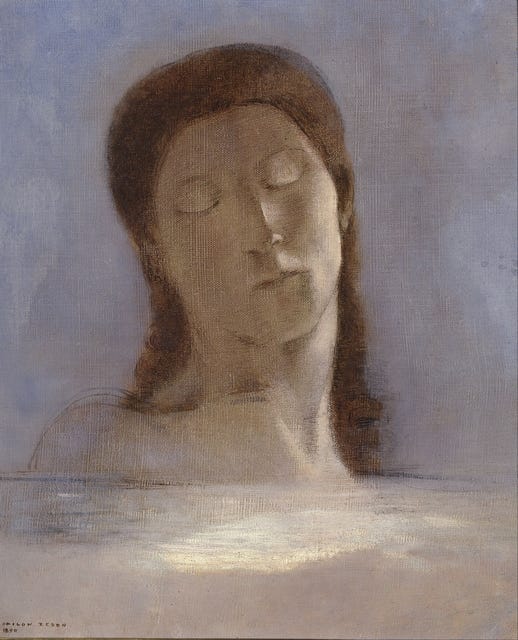
Odilon Redon (1890) Closed Eyes [Les Yeux clos] [Painting] [Symbolism] [Oil on canvas] [44 × 36 cm] Musée d’Orsay, Parigi
If painting is usually thought of as the art of looking, that is only because nobody bothered to ask Odilon Redon. For him, the most interesting things begin when sight steps aside.
Closed Eyes feels like the manifesto of that idea: a face suspended between sleep and disappearance, held in a calm too deep to be entirely real. I’d say it has the look of someone who wouldn’t give you the time of day. But this is Artcade, so let’s put it more politely: it carries a kind of serene estrangement, distant enough to seem untouchable and still close enough to be felt. Honestly, the previous version gets there faster.
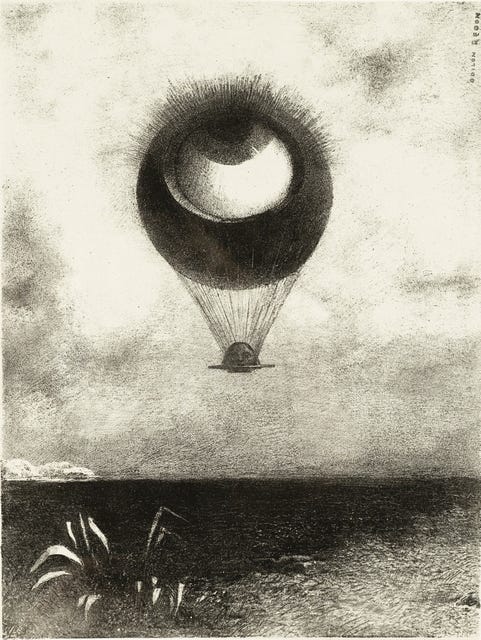
Odilon Redon (1882) The Eye, Like a Strange Balloon, Mounts Toward Infinity [L’Œil, comme un ballon bizarre se dirige vers l’infini] [Drawing] [Symbolism] [Lithograph] [25.9 x 19.6 cm] The Museum of Modern Art, New York
Before becoming the painter of radiant color, Redon was known for his charcoal drawings and dark lithographs, filled with floating heads, giant eyes, impossible creatures, and thoughts that seemed to have grown arms and legs. He poured that overactive imagination straight into the work. By the time he had to come up with a title, he may have had very little energy left, but that does not change the fact that The Eye, Like a Strange Balloon, Mounts Toward Infinity is an unsettling marvel.
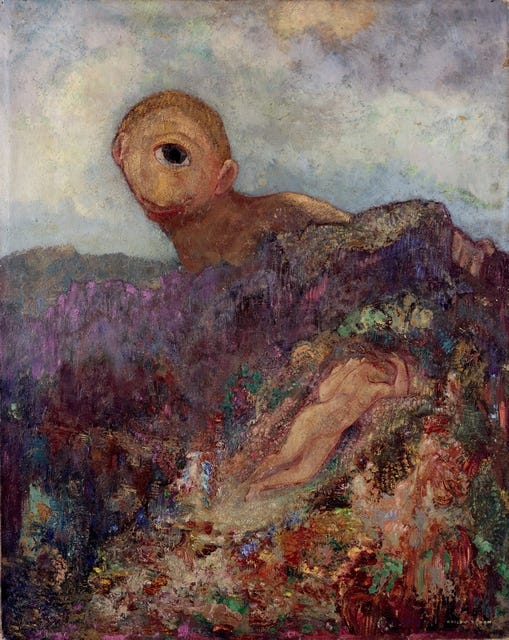
Odilon Redon (c. 1914) The Cyclops [Le cyclope] [Painting] [Symbolism] [Oil on cardboard mounted on panel] [65,8 × 52,7 cm] Kröller-Müller Museum, Otterlo
And yet Redon is not only darkness and hallucination. Take The Cyclops, for example. Nobody would deny that the creature in the painting is a monster, and yet the terror is almost imperceptible, leaving room for something strangely tender, the kind of being that could almost wander into a Nintendo game. Redon’s creatures do not merely threaten: they look, they float, they wait. They live in an emotional world that throws the viewer off balance, a world far stranger and more disarming than it is cruel. At least that’s how it seems. Just to be safe, maybe choose a different picnic spot.
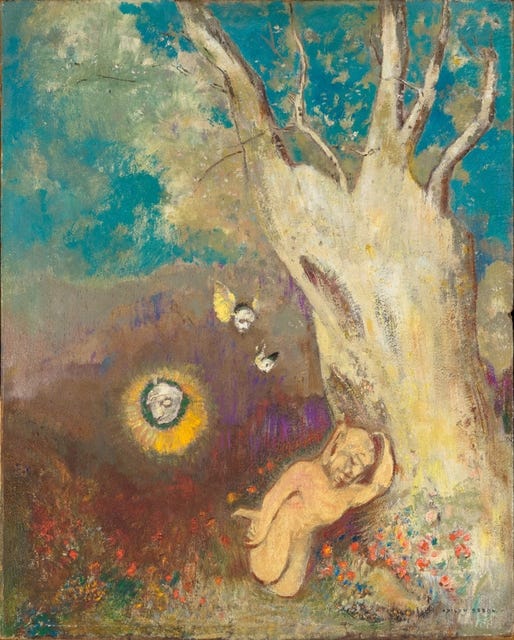
Odilon Redon (between 1895 and 1900) The Sleep of Caliban [Sommeil de Caliban] [Painting] [Symbolism] [Oil on wood] [48,2 × 38,5 cm] Musée d’Orsay, Parigi
Ever wonder how painting moved beyond Impressionism after its overwhelming success? Odilon Redon is one answer. I also wonder how cinema plans to move beyond Marvel, but that is a separate problem.
Redon painted landscapes the Impressionists were never going to see. Scenes where floating heads visit us in the narrow space between dream and waking life. Freud was still developing his theories, but other artists and thinkers were already walking down nearby roads by other means. Redon was someone who took the unconscious seriously.
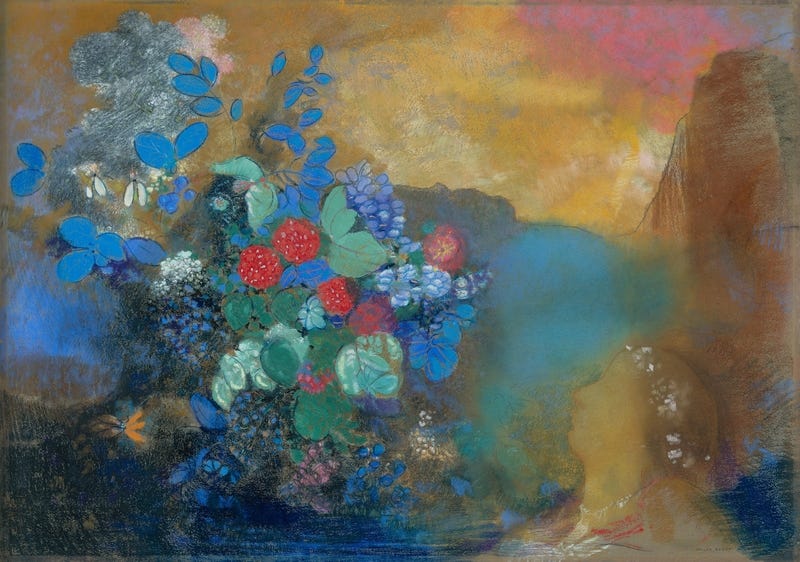
Odilon Redon (between 1905 and 1908) Ophelia Among the Flowers [Ofelia entre las flores] [Painting] [Symbolism] [Pastel on paper] [64 × 91 cm] The National Gallery, Londra
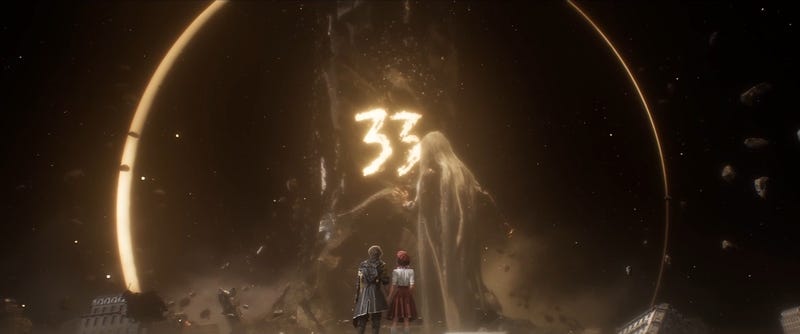
The premise of Clair Obscur: Expedition 33 is well known: once a year, the Paintress awakens and paints a number on her monolith. Each time, it drops by one. The game opens on the day the number goes from 34 to 33, and everyone aged 34 turns to smoke and disappears. That is why an expedition sets out each year, because once you only have one year left to live, the only thing left to do is leave and hope you can stop the Paintress and break the cycle of death. In other words, light stuff.
But Clair Obscur: Expedition 33 is not just an interesting premise. It would take a whole series of episodes to unpack all of its artistic references, so this may well become the first entry in a future One Bit Of series devoted to the game. Who knows. For today, though, we are pairing it with Redon’s paintings.
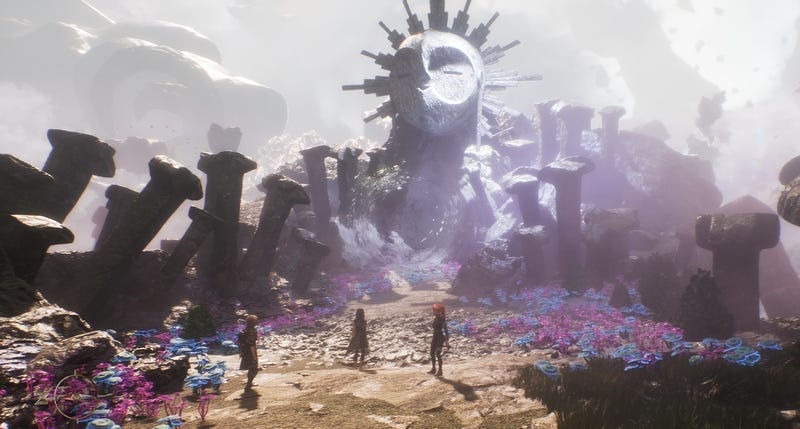
Let’s go back to Closed Eyes, where an immense figure stands before us in total indifference. Part Paintress, part fantastical creature, like the one you can see in the screenshot above.
Clair Obscur: Expedition 33 is certainly tragic, certainly grand, certainly full of spectacle. But beneath all that, it feels like a vision. It moves like something half-remembered, or too vividly dreamed, or painted by someone trying to give form to an inner world before waking up and losing it. Redon knew that territory well. You can see it both in his more radiant paintings and in his darker lithographs, where black and white becomes the medium he sinks deepest into. Those are the same roots feeding some of Expedition 33’s key scenes.
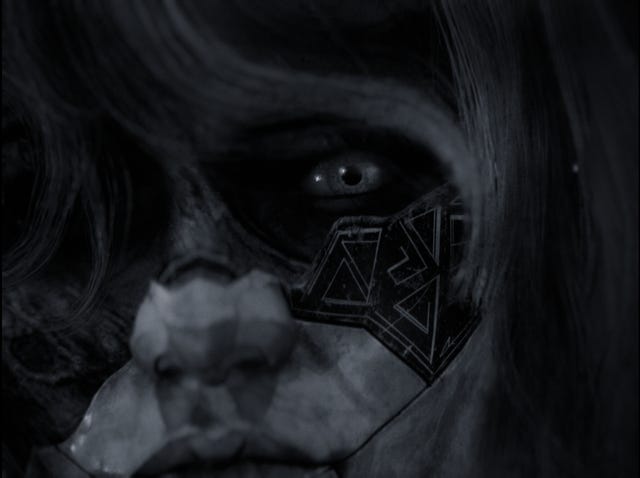
With Redon, we step into fantastical environments, unsettling and yet strangely enveloping. Creatures that feel threatening, yet inspire a strange kind of affection. Floating faces. Mental landscapes. A world made of vivid colors that feel real, perhaps because all of us know the territory of dreams from experience.
In the four images that follow, Redon turns into a video game.
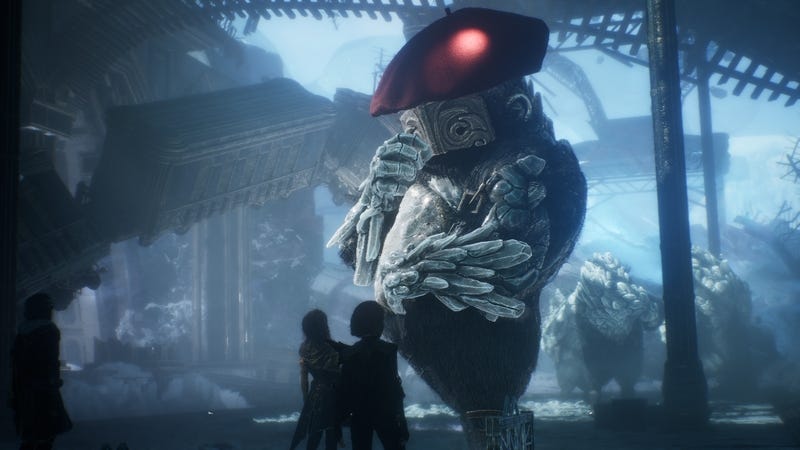
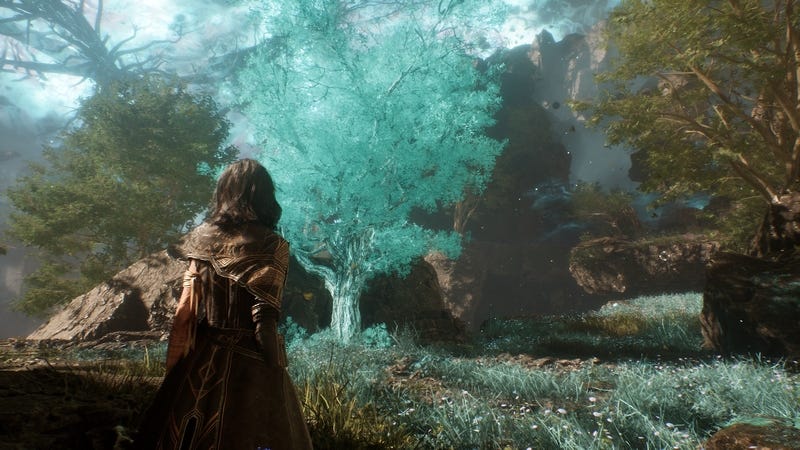
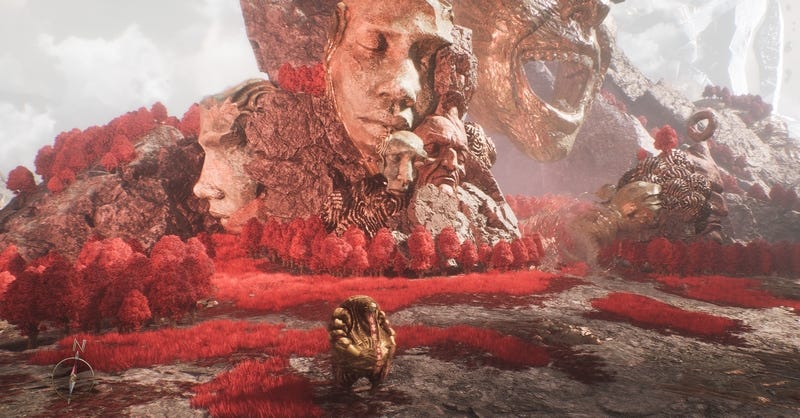
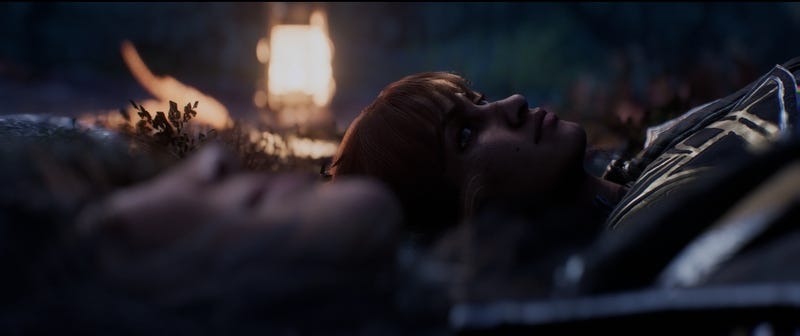
Clair Obscur: Expedition 33 does not reproduce a single canvas or one of Redon’s exact techniques, but Lumière, the city from which the game’s protagonists depart, feels painted with the same brush. Neither Sandfall, the developers, nor Redon are interested in objective description. They are drawn instead to emotions and ideas. The spaces of Expedition 33 feel like externalized mental states: grief rendered as architecture, acceptance as flowers, resilience as combat. The whole adventure is a terrible, beautiful journey, and you may want to approach it with a notebook in hand. You never know when those notes might come in handy outside the game.
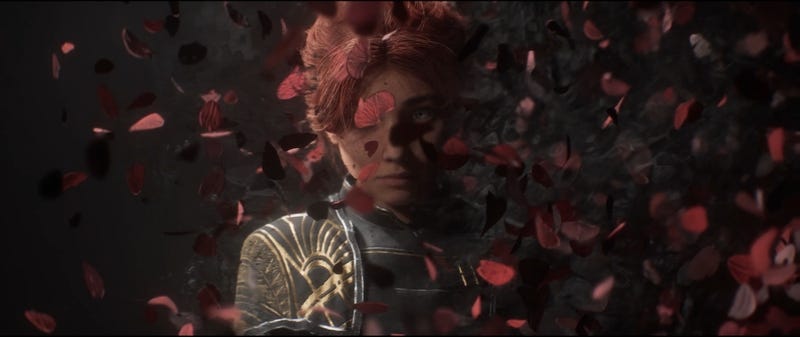
Sandfall Interactive (2025) Clair Obscur: Expedition 33 [Video game] [Role-playing game] [29 hours] [Xbox Series X] [PlayStation 5, Windows, Xbox Series S] Kepler Interactive
Information Desk:
A soi-même (To Oneself) is Odilon Redon’s diary, published in 1922, and you can read it online if you know French.
“Year by year, she erases us.” If you are still not convinced you should play Expedition 33, the official website opens with exactly that line. Efficient, cruel, memorable. Marketing departments dream of copy like this and usually wake up with “Two for the price of one.”
And if what fascinates you most is Redon’s black-and-white period, full of strange creatures, eyes, and floating heads, MoMA has a beautiful online collection you can browse from the comfort of your couch.
My last two coins
Many things refuse to be seen with open eyes. Maybe that line alone would be enough, with no need to add anything else. Anyone who has ever looked at the world with their eyes closed already knows. Anyone who hasn’t may simply have no way of learning it. Everyone has their own skin to live in. Until the next episode, ciao!