

Welcome back to Artcade, the missing puzzle piece in your inbox. After a short break, we’re picking up right where we left off, ready to uncover new and unexpected points of contact between video games and the more “prestigious” arts. We have projects coming out of our ears, and while ideas slowly ripen with a long aging process, we’re starting the year with the first Artcade episode of 2026. What could possibly be better? Enjoy!
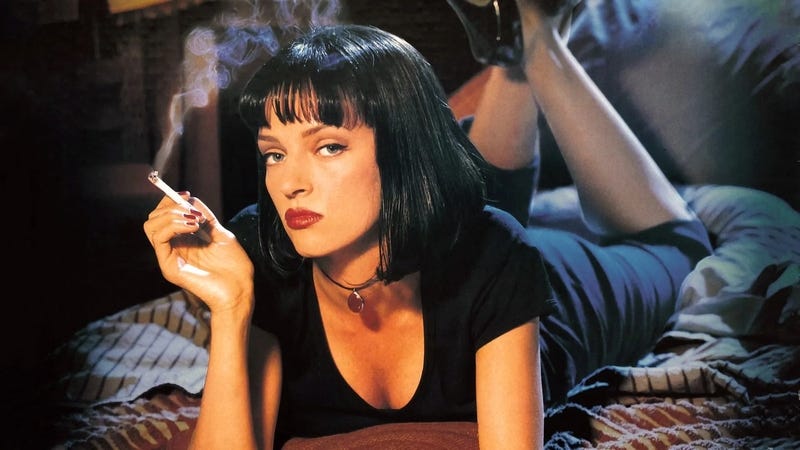
Quentin Tarantino (1994) Pulp Fiction [Audiovisual work] [Drama, crime, gangster] [154 min.] Miramax Films
It won’t be easy. What comes first arrives later, comes back, loops around again. I’d like to tell Pulp Fiction in a single paragraph. Meaning comes from emotional juxtaposition, from suspense, (Basically, I’d like to stage it without getting lost in too many words. In the end, maybe we’ll lose the thread, but we’ll be hypnotized by the story.) from revelation that doesn’t depend on events unfolding, but on the moment they’re told. Everything in Pulp Fiction is built on editing, even this paragraph. It would be even better to make it real: use words to show the mechanism, not to describe it. Chronology doesn’t matter. In Pulp Fiction, scenes don’t follow the chronology of events.
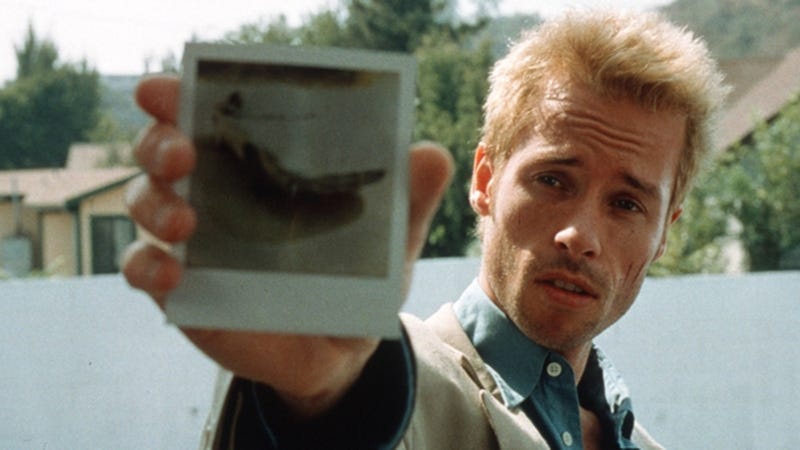
Christopher Nolan (2000) Memento [Audiovisual work] [Psychological thriller] [113 min.] Newmarket
In Memento there are two narrative lines: one moves forward, the other moves backward. Maybe we can’t even trust ourselves. Without the comfort of cause and effect, as reassuring as gravity, the whole film feels like a nightmare where there’s nothing to hold onto. Forced to invent connections, look for patterns, latch onto details that might be useless. Sometimes they aren’t even clues, they’re simply what the film puts in front of us. The effect comes first. And like the protagonist, we cling to the few clues we have. Tattoos, photos, people. Without knowing whether we can really trust anyone. We lack context. Only at the end do the two lines meet, but it’s too late.
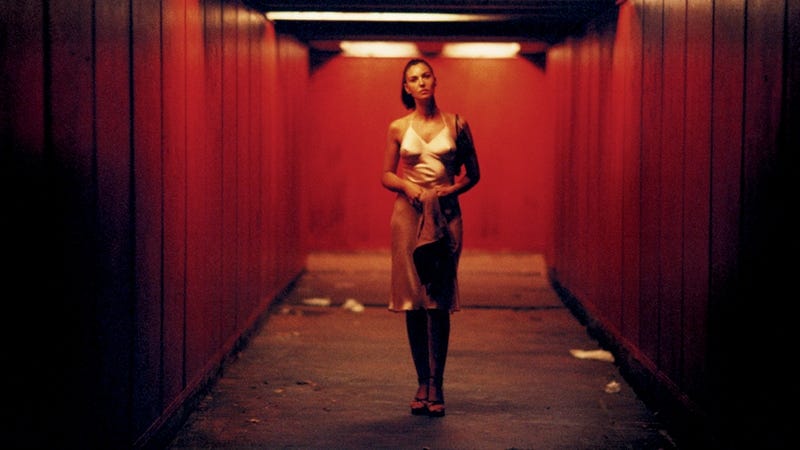
Gaspar Noé (2002) Irréversible [Film] [Thriller] [97 min.] StudioCanal
[Note: the film contains a sexual assault scene and very graphic imagery. If this is a topic you prefer to avoid, do not watch this film.]
Everything is shattered, in pieces, even when nothing has happened. Without meaning to, we discover that the beginning was stained by the end. You can’t escape into the past: once you’ve known pain, it sticks to your skin. That makes it even crueler. Watching normal life, calm and ordinary, knowing that violence will come later (actually, for us it has already happened) does not soften what we know. It makes it worse. We know the story went that way, it’s Irréversible, exactly. Painful. Still brutal. A descent into hell doesn’t become an ascent into heaven, quite the opposite. It’s the way we read the world that changes, not the story itself. And yet something changes. Deep down the story stays the same. What happens if you tell a story backward?
Editing isn’t just the way a film “flows.” It’s the way a film thinks. And some works force us to think the way they do. Luckily, in video games we can grab the steering wheel again, even if that doesn’t necessarily mean it’ll be an easy ride.
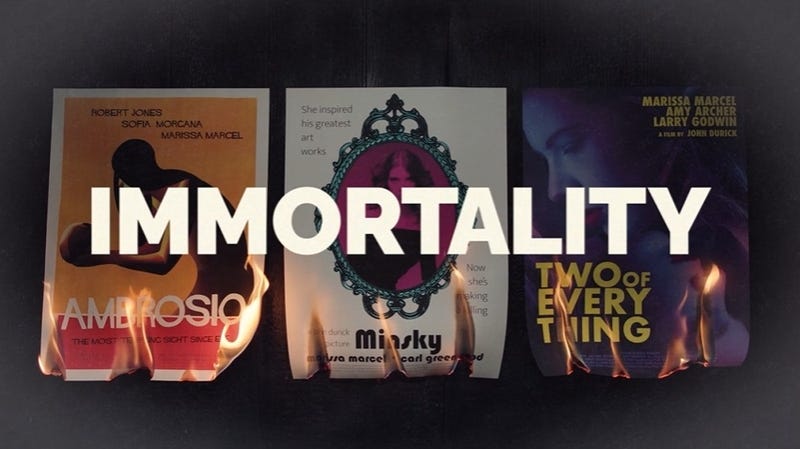
If, in the three films we covered in the first half of this episode, editing manipulates us through style, trauma, or amnesia, in Immortality the power to decide the viewing order is in our hands, and it becomes the tool we use to understand what happened to Marissa Marcel. The art of editing turns into the game’s interface.
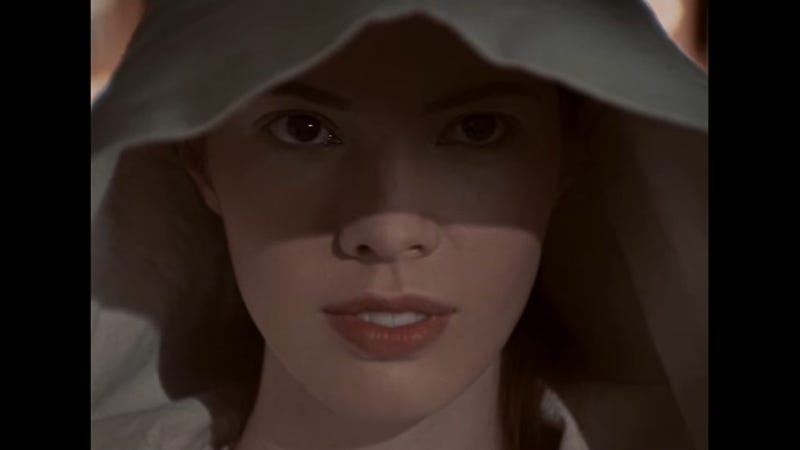
We have access to an archive of footage tied to the actress, the star of three films that were never released. So far it sounds like the story of an unlucky career, but since Marissa Marcel vanished, the feeling grows that somewhere, between one clip and the next, there’s a truth just waiting to be uncovered.
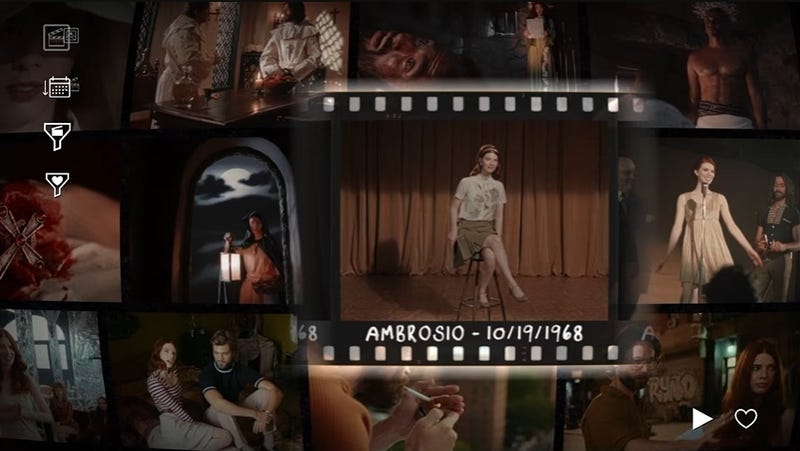
The game’s strength is exactly how it tickles both our inner detective and our more questionable curiosity for gossip. Beyond the footage from all three films, the archive includes interviews, rehearsals, behind-the-scenes material, and other scraps you can use to piece together what happened. You can pause any clip, scrub back and forth, stop on a single frame, and cut to another fragment by clicking on a face or an object.
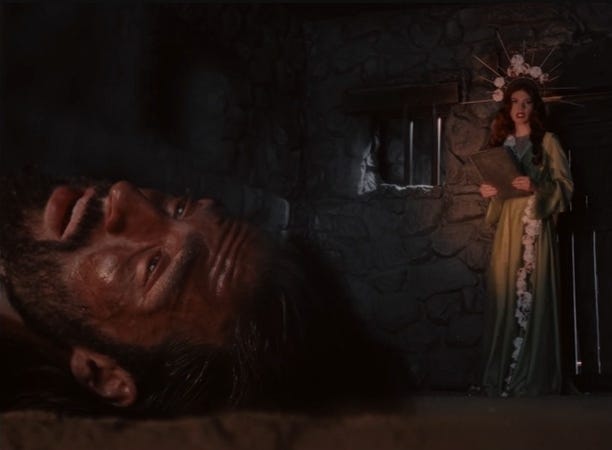
In Pulp Fiction, Tarantino uses every cut to create rhymes and returns. In Immortality, everything that attracts us becomes a thread that guides us through the knot of footage. It feels like being hypnotized by a detail, then chasing it without really knowing what we’re looking for. Even when we’re unsure, every jump we make creates a deeper complicity between us and the story we’re dissecting. We invent the rhymes ourselves. The meaning too.
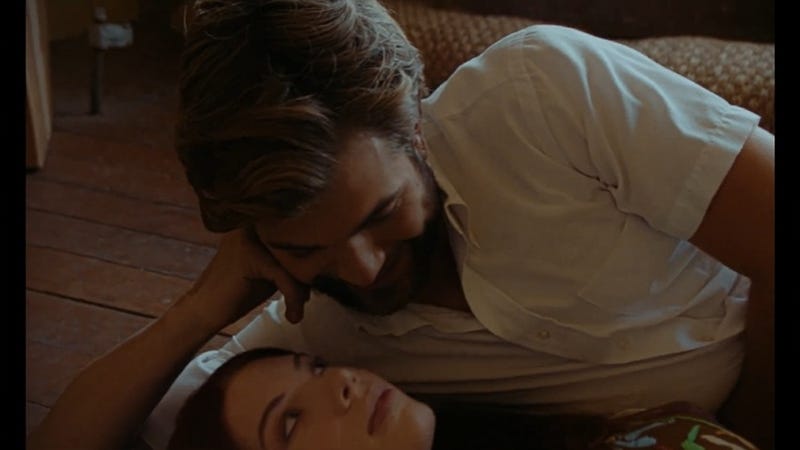
And if in Memento Nolan flips chronology to pull the ground out from under our feet, in Immortality there’s too much context: fragmented, contradictory, and industrial in quantity. Putting everything in order, building a linear story, might be an impossible mission, but the real pleasure is in the edit we create ourselves through associations and visual echoes. Immortality is a labyrinth where our intuition builds the exit route.
If the idea of watching footage on top of footage doesn’t scare you, don’t miss Sam Barlow’s latest creation.
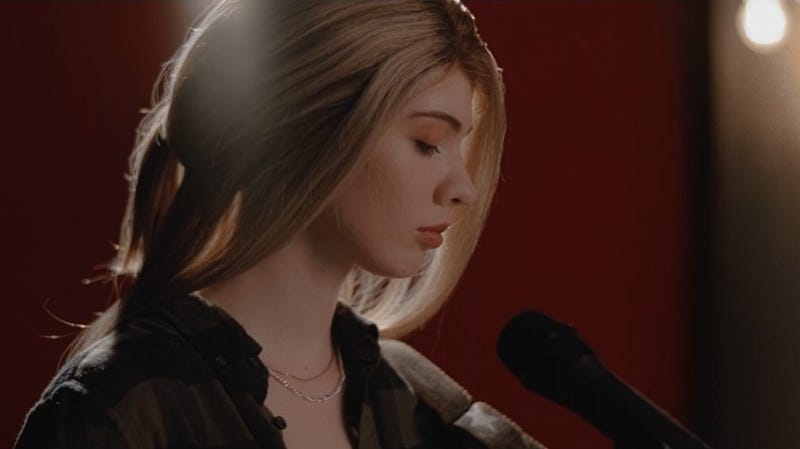
Sam Barlow (2022) Immortality [Video game] [Interactive film] (iOS) [Windows, Xbox Series X|S, Android, PS5] Half Mermaid Productions
Information Desk:
Some time ago we already talked about Pulp Fiction, but back then we were obsessed with Mr. Wolf and the thankless job of cleaning up crime scenes.
The kind of editing we looked at in this episode serves ideas and concepts, but it doesn’t have to work that way: It’s a Wrap! is a puzzle-platformer where you prep the scene like a director, deciding the timing of events, gags, and hazards, and then you run through it as the protagonist, playing the big star of a bargain-bin B-action movie. In It’s a Wrap!, your work doesn’t change the moral meaning of the story, and it doesn’t make deep concepts tangible. It only decides whether something explodes in your face at exactly the right second.
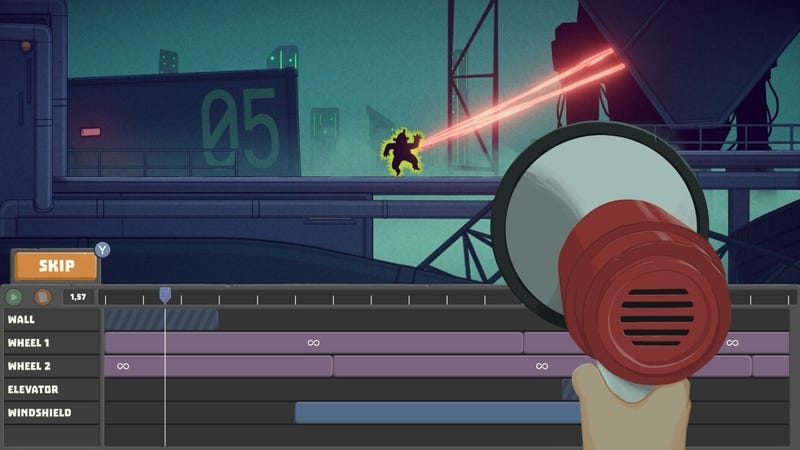


My last two coins
You may not realize it, but we’re all masters of the art of editing. In real life we cut, paste, and rearrange our experiences however we like. We take pieces of a day and put them in order so we can say, “See, this is how it went,” even when it didn’t go that way at all. Someone will call them lies. In reality, we’re expert editors. The truth is we don’t do it to understand. We’ve understood, unfortunately. We do it to survive. See you next episode, bye.