

Welcome back to Artcade, the hermit who went looking for silence and wound up in a theme park. Today is a festival of contradictions that somehow fit together. Even opposites have a way of holding hands if you let them. I’ll apologize up front for the shortcuts I’m about to take with the concept of yin and yang and Taoism. If you like the ideas I only sketch out below, let them be a nudge to dig deeper (and then come back here to tell me I oversimplified). Enjoy the read!
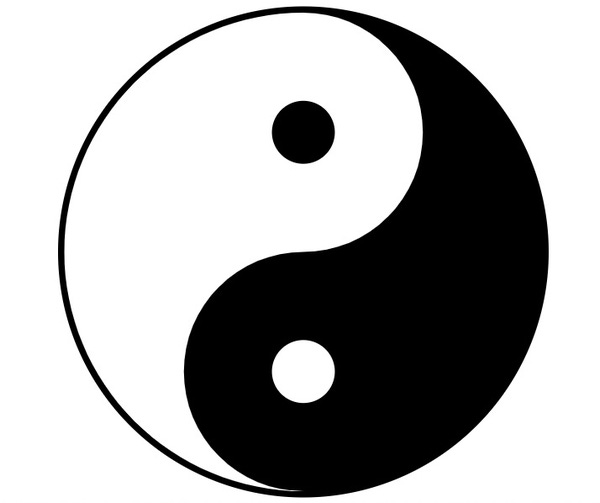
Everyone knows the circle split into a white teardrop and a black teardrop, each with a dot of the other inside. It isn’t a logo. It’s yin pouring into yang and yang returning the favor. Neither half is pure; each shelters a seed. Treat it as choreography, not as a fence. Black with white, not black against white. Like night and day softening each other’s edges; like the silence that comes before and after a musical note.
The Taijitu is the user manual for opposites: in a single glance it shows that any system stays healthier when different drives take turns instead of declaring war.
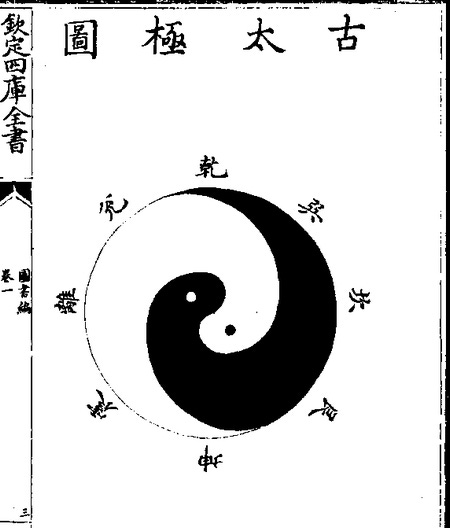
There are so many Taoist ideas that deserve a deeper dive: opposites working together; effortless action; the empty center. That last one would be worth applying to the mind, starting from the image of a vessel whose value lies precisely in its hollow. But Artcade isn’t quite the place to go that deep; we keep things moving here. Still, I’d like to quote a passage (which I came across while preparing this episode) from the Tao Te Ching, one of Taoism’s foundational texts.
Those who seek knowledge,
Collect something every day.
Those who seek the Way,
Let go of something every day.They let go and let go,
Until reaching no action.
When nothing is done,
Nothing is left undone.Never take over the world to tamper with it.
Those who want to tamper with it
Are not fit to take over the world.
Tao Te Ching by Laozi (or Lau Tzu), chapter 48 (translation from taoistic.com)
Ikaruga is one of those games that were all the rage years ago: the “shoot ’em up.” As the slightly on-the-nose name suggests, shoot ’em ups are about blowing up anything that moves on screen, and Ikaruga is a classic example (even though it came out in 2001, when the golden age of shoot ’em ups was already over). The gist is simple: you pilot a tiny ship, fire at millions of enemies, and dodge billions of bullets.
So what does a game about destruction have to do with harmony? Everything, oddly enough. Ikaruga is a shooter where survival is a matter of balance, timing, and choosing when not to fight.
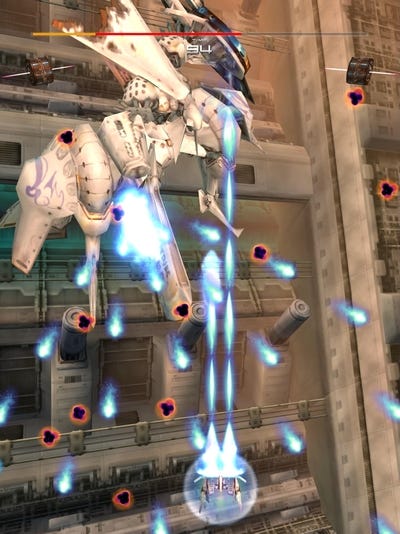
The most distinctive part of Ikaruga is the ship’s ability to switch polarity. Tap a button and you flip from white to black and back again. Meanwhile, everything on screen is spitting bullets of one color or the other. White bullets recharge you when you’re white and kill you when you’re black. Black bullets recharge you when you’re black and kill you when you’re white. Attack and refuge aren’t separate choices; they’re the same choice at different beats.
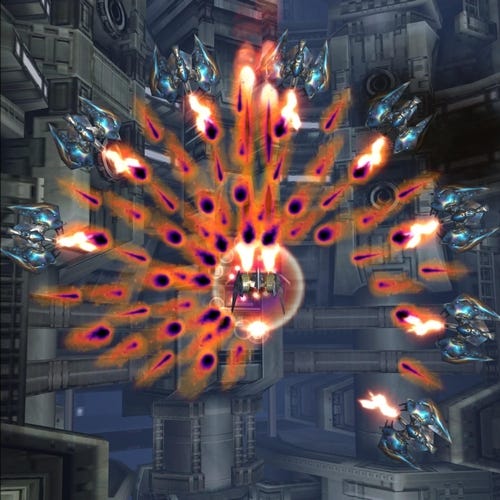
The ability to absorb bullets of our own color makes us practically invincible (see image above), but the situations we find ourselves in are, of course, never that simple.
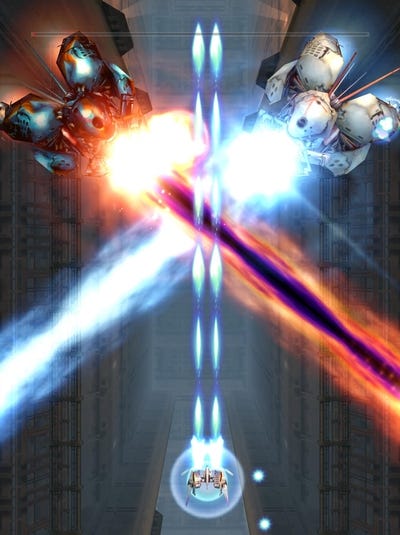
You almost never see just one color on screen. Enemy waves braid black and white together, and to move forward, switching between the two states has to become as natural as breathing in and out. Keep in mind the S-shaped line that runs through the Taijitu, picture it, and turn it into a path for your ship to follow. The trick to progressing is not to take sides with one pole or the other. The trick is cadence, the way you alternate them inside yourself.


Sometimes in Ikaruga—as in life—things get really complicated. Or we find ourselves facing something terrible, one of those events that leaves a mark. In games, that’s the boss at the end of the level.
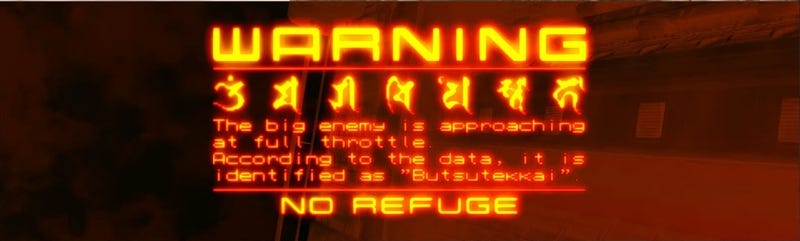
Bosses are where the back-and-forth between white and black gets pushed to the limit. Some are mega-robots the size of buildings; others are space stations tangled up like a ball of yarn with a cat in the room. And then there’s my favorite, the giant Taijitu. Forgive the slightly on-the-nose look: it’s clearly the developers’ way of spelling out the game’s philosophical foundations.
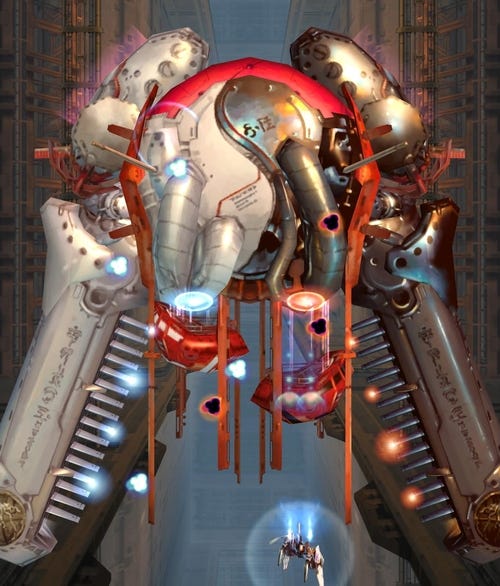
It might sound odd to call Ikaruga an example of harmony. Yet the very duality that lets you absorb incoming shots (and use them to charge a counterattack) is a neat picture of opposites that coexist and work together. But it doesn’t stop there.
The idea of effortless action—wu wei—is built into Ikaruga, and you can push it to the limit: every level can be cleared without firing a single shot, simply by alternating polarities. Even the bosses, after a certain amount of time, accept this way of acting without acting and leave. And the empty center? Well, what could represent it better than a shooter where, on a perfect run, you keep the kill count at zero?
I said we wouldn’t dig too deep into Taoism, yet here it is embodied by Ikaruga. It’s a gamepad away. You can experience it, or better yet, play it.
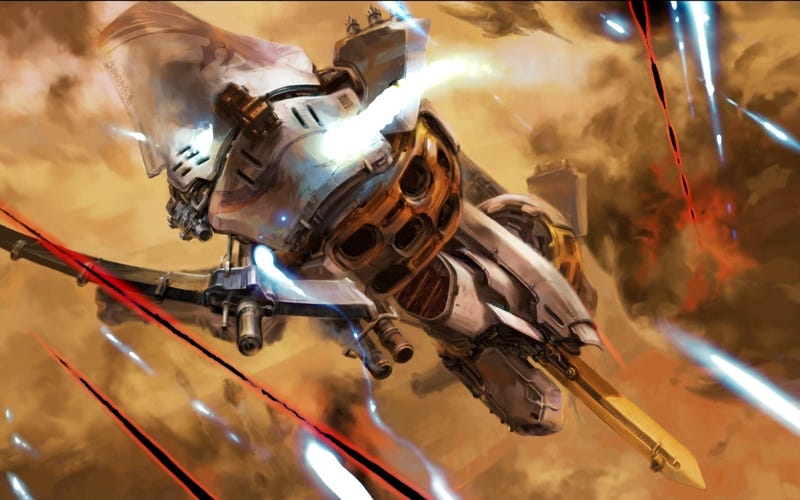
Treasure (2001) Ikaruga [Video game] [Shoot ’em up] [1½ Hours] (Playstation 5) [Arcade, Dreamcast, GameCube, Xbox 360/One/Series X/S, Windows, Nintendo Switch, PlayStation 4] SEGA
Information Desk:
By now you’ve read the name a dozen times, but I still haven’t said what “Ikaruga” means. And what do you think the Information Desk is for? It means “Japanese grosbeak” (Eophona personata). It’s this charming little bird:

The Taijitu is the symbol of balance, the representation of yin and yang, and apparently a hard-to-resist tattoo idea.
If you’re curious how to finish a shoot ’em up without firing a single shot:
My last two coins
Now I could use a conclusion, but I’m not sure which. A funny one? A witty one? Maybe the best ending is simply this: yin and yang, again. Keep ignorance and knowledge together, momentum and pause, black and white. Don’t pull from just one side; alternate. Let the world be something other than a constant tug-of-war with a winner and a loser, and try inhabiting it with a gesture closer to dance. Live in the world as if you were waltzing, softly. Yes, that’s a closing I like. Until next episode, ciao!