

Welcome back to Artcade, the cloakroom where you drop off your coat and, if you feel like it, your need to keep everything under control. Museums already have cameras, sensors, thermometers, guards, staff, docents… you don’t need to monitor things too. Feel free in museums. Free to look, study, learn. Just don’t start dancing next to some vase that’s been around for a few thousand years. And whatever you do, don’t tell anyone I suggested it. Enjoy the read!
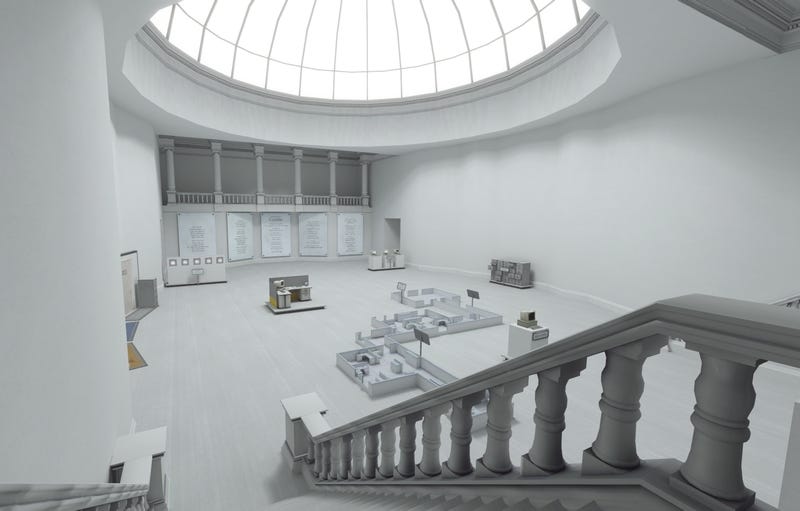
And here we are: the Stanley Parable museum. What we’re visiting today in ExhiBit is a museum that’s typical and unique at the same time. Let me explain: like any respectable institution, the vibe is sterile, with white light and didactic labels. But the collection isn’t about Ancient Greece, whales, or hypnotic paintings. The collection is about The Stanley Parable.
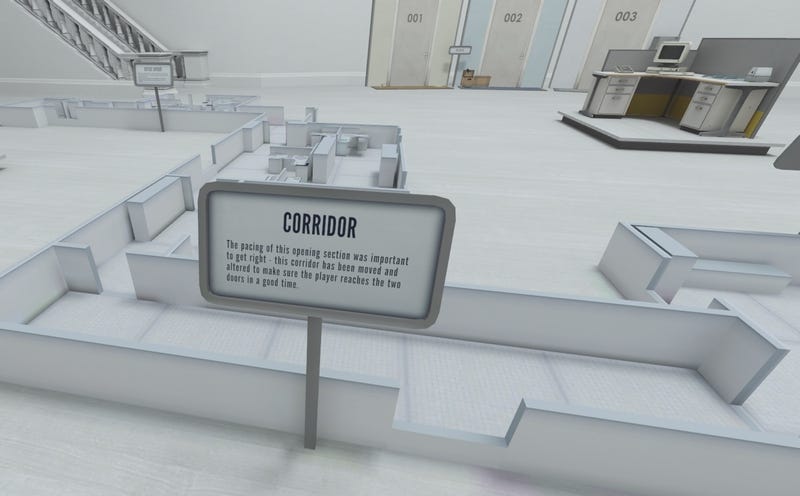
The museum includes scale reproductions of the game’s environments: architectural models of tiny offices, tiny corridors, tiny decisions that felt enormous when we made them. In a normal museum, miniatures make us feel powerful, like benevolent gods flying over a city. Here, the opposite happens. They remind us that the game has always been watching us from above, observing us as we ran in circles and called it “exploring.”
There’s also something strangely intimate about seeing the game turned into a model. It almost feels like going back to your childhood bedroom and discovering someone has inventoried it. Closeness and estrangement blend together.
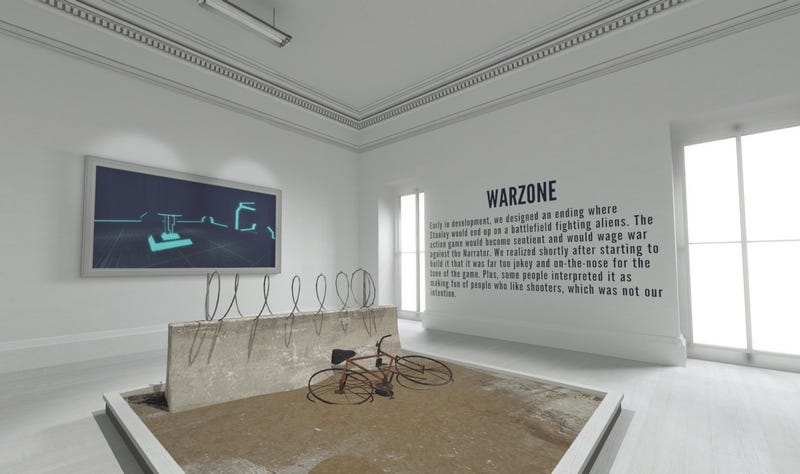
Then come the prototypes and the ideas that never made it, sacred relics of what could have been. In the photo above we see a section that got shelved: a moment when the game was supposed to turn into a battle against mysterious aliens, a parody of shooters. But the tone didn’t fit the rest of the project. A missed opportunity, or a sensible choice? The museum becomes the place where we’ll ask ourselves that question forever.
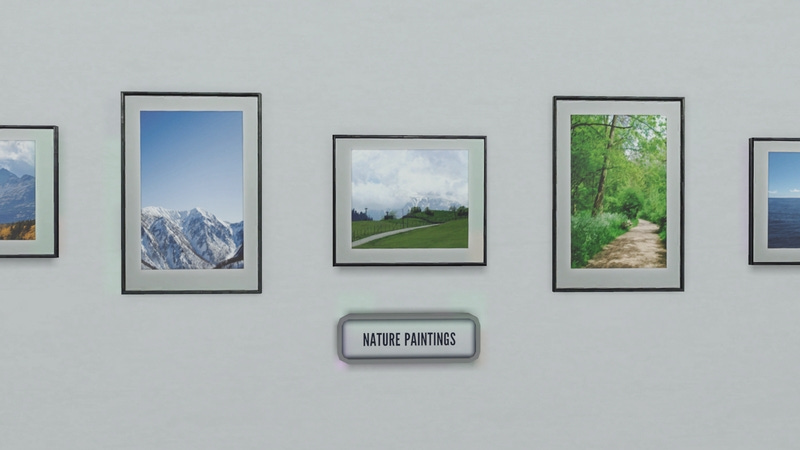
The office setting is (rightly) celebrated. Paintings of generic landscapes, computer screens showing solitaire or command prompts. Office art is a genre of its own. It tries incredibly hard to say nothing, but with an inspirational tone, like any LinkedIn post.


Even the pause menu is part of the collection. In most games the pause menu is where you go to breathe, check your inventory, step out of the fiction for a second. Hung on the wall like a realist painting, we discover that one of the game’s endings was hidden right here. This escape route was also under control, but nobody noticed, so it got removed. Only the memory remains. Framing a pause menu and a vanished ending is a true museum move.
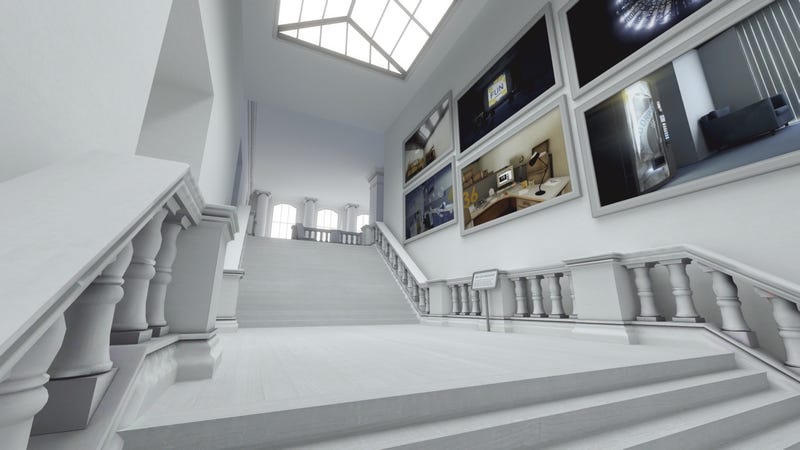
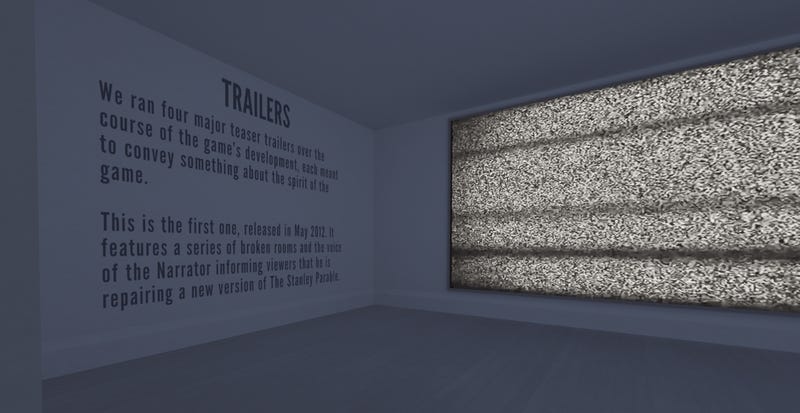


As we keep walking, we reach the video section, where we can watch the game’s trailers. In a nearby room we see, from a new perspective, the relationship between authors and audience: the emails players sent to the Narrator. Provocative questions, nonsense, demands for explanations and absolute truth.
Museums are usually places where the past is stabilized. The Stanley Parable stabilizes the game’s entire life path: from design, to communication, all the way to the very moment we’re inside it. I think Davey Wreden and William Pugh (the creators) are watching us and laughing.
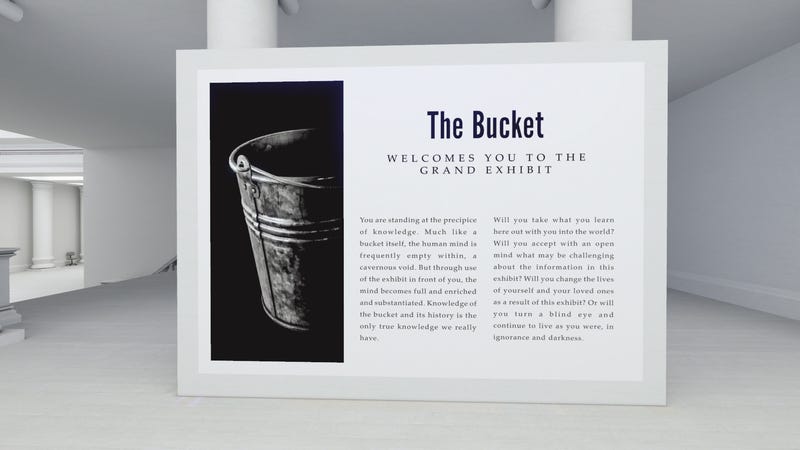
And then there’s an entire section dedicated to one of the game’s protagonists: the Bucket.
The Bucket in The Stanley Parable is many things. From an emotionally neutral container, it slowly becomes a companion, a symbol, a moral problem, and more, but I won’t say anything else. If you know, you know. Otherwise: play it. In the museum, the whole wing dedicated to it deserves special attention.
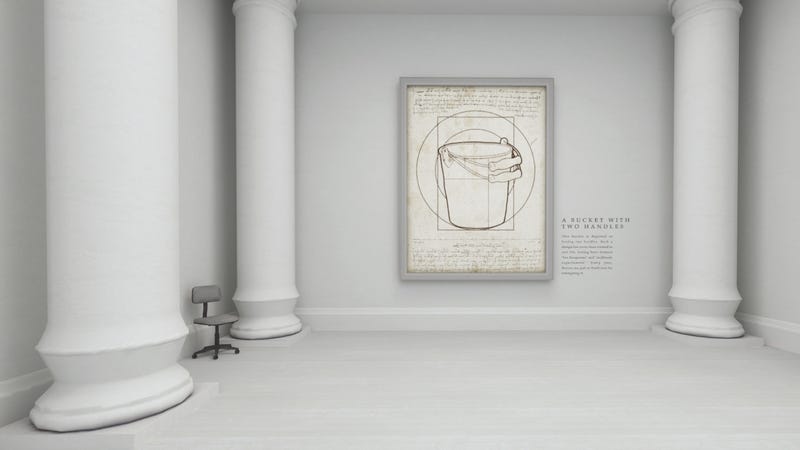
Here the Bucket is depicted as the Vitruvian Man, creating what might be the biggest downgrade in art history.


In another image the Bucket is photographed alongside countless other buckets, but the label says there are 25. Why lie? Better question: what if the label is right?
In The Stanley Parable museum there are many other depictions of the Bucket, but to wrap up our visit I want to leave you with the one that feels, historically, the most important: the Bucket in cave painting.
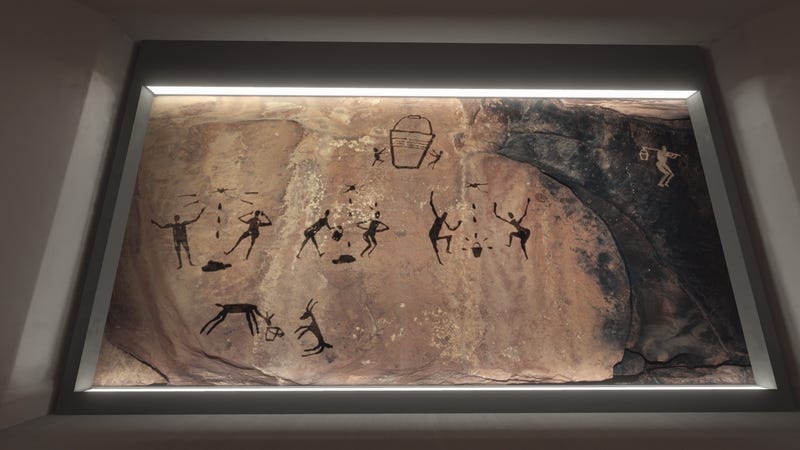
Davey Wreden, William Pugh (2022) [2013] The Stanley Parable: Ultra Deluxe [Video game] [Interactive storytelling] [2 Hours] (Xbox Series X) [Windows, macOS, Linux, Nintendo Switch, PlayStation 4/5, Xbox One/Series S] Galactic Cafe
My last two coins
Museums are good at preserving things: objects, history, meanings. I think it would be nice to live in a museum cloakroom, a place where you can feel preserved for eternity. Even though, in reality, the permanent museum of ourselves already exists: archived photos, saved chats, memories that resurface as a notification at set times. Look how you used to be. Do you like it? Today this version of you is back on display.
Who knows whether all these reflections of ourselves mean anything. We keep rewriting our personal narrative, polishing it, turning it into a meme, framing it, filtering it, until we convince ourselves that version was always the original. In its museum, The Stanley Parable takes its own essence and puts it under glass. At least it does it while making fun of itself. Today’s visit is dedicated to the noble art of telling your story by laughing first, so nobody else can beat you to it. Until the next episode, ciao!