

Welcome back to Artcade, the second-favorite place for flies. The first is... well, never mind. Human beings have spent centuries trying to face death with dignity: the ceremonies, the outfits, the stirring music (that stuff gets me every time). Not to mention flowers collapsing with tremendous grace. Then a fly starts buzzing around the room and the whole pompous epic falls apart. Maybe the fly is doing us a favor. To be clear, I’m not a fly defense attorney, I’m just introducing an episode where a tiny protagonist has taken up more space than usual. If you want to know why, all you have to do is start. Enjoy the read.
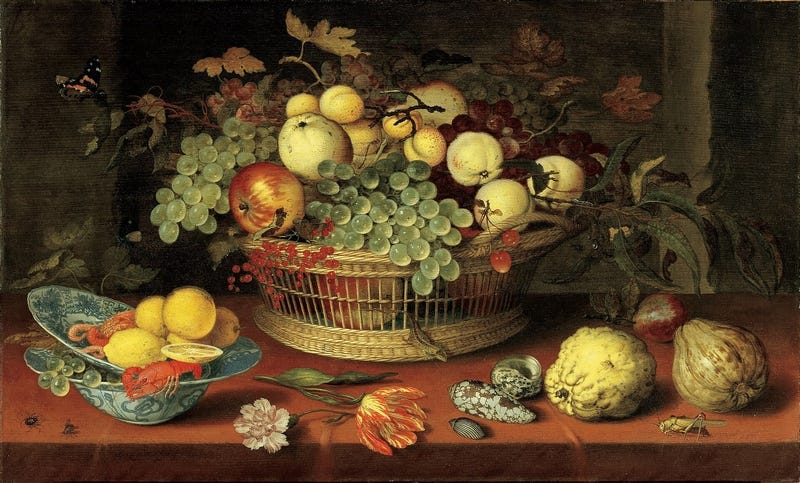
Balthasar van der Ast (1622) Still Life with Basket of Fruit [Painting] [Still life] [Oil on panel] [49.5 x 81.3 cm] North Carolina Museum of Art, Raleigh, US
I’ve always been struck by the difference between the English name for this genre of painting, still life, and the Italian one: natura morta which, translated literally, would be “dead nature.” In Italian, all the attention goes to the cut stem, the fruit that may still look colorful and beautiful but has already been severed from the plant. It’s dead. That’s that. Still life, on the other hand, puts the emphasis on immobility. Life is frozen inside the painting and separated from the movement that defines every living being. Even the tiniest movement will do, like a sloth’s, or mine at 7 in the morning. In a way, once life is made still, it becomes immortal.
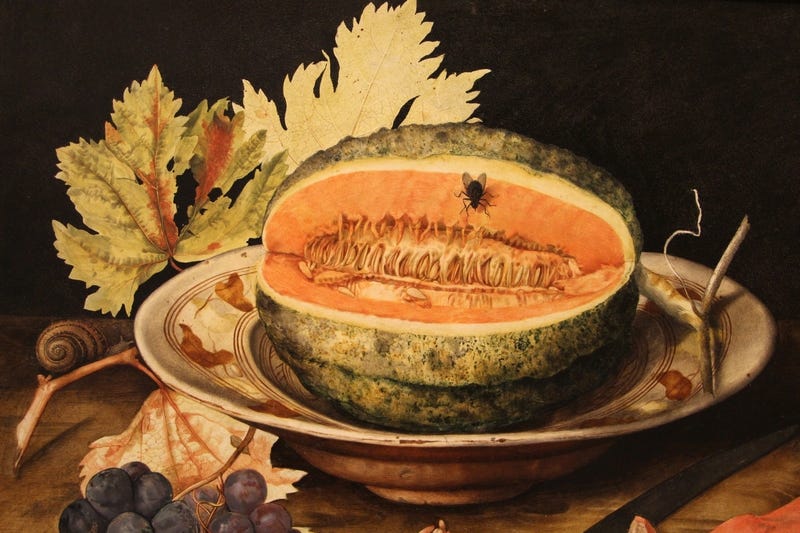
Giovanna Garzoni (c. 1650) Melon on a Plate with Grapes and a Snail [Painting] [Still life] [Tempera on parchment] [35.5 cm x 49.5 cm] Palatine Gallery, Florence, Italy
Giovanna Garzoni’s Melon on a Plate with Grapes and a Snail is a perfect example of what I mentioned in the introduction. Everything looks delicious. Or rather, it would look delicious, if it weren’t for the fly. The snail at least has the decency to head toward the leaves. The fly does not. It has to steal the scene and remind us what we’re really looking at: not a scene of opulence, not a celebration, not a triumph of life, but a feast that is about to spoil, where everything is already sliding toward rot.
All those seventeenth-century painters who filled their canvases with objects, fruit, and extravagant flowers did it to remind us that everything decays. The sneaky bastards. Just look at that melon. Speaking of symbols. Painters lure us in with bright colors, and only after we’ve stepped closer do we realize that time has already landed on all that wonder with its tiny little legs.
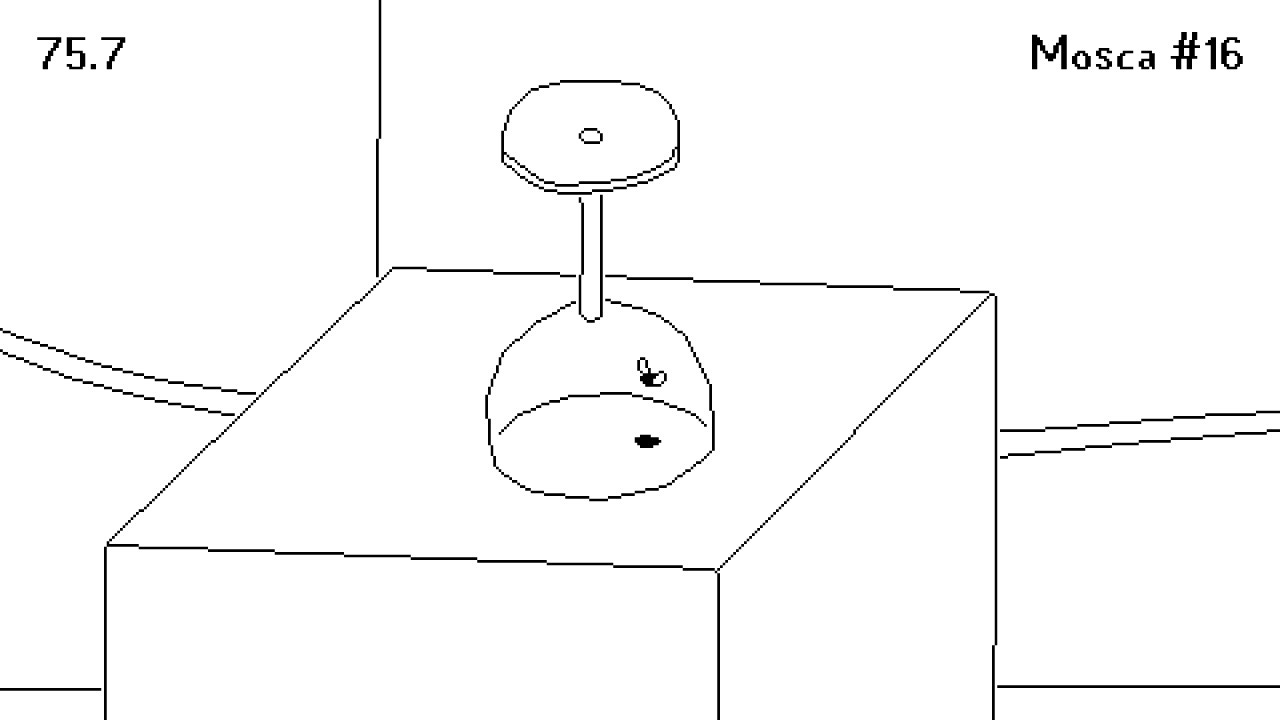
Time Flies puts us in charge of those tiny little legs. Maybe controlling a fly is not your greatest aspiration, but give me a second. The flies in Time Flies have a task list that looks like one of those things-to-do-before-you-die lists. Here’s one example. There are others in the game too.
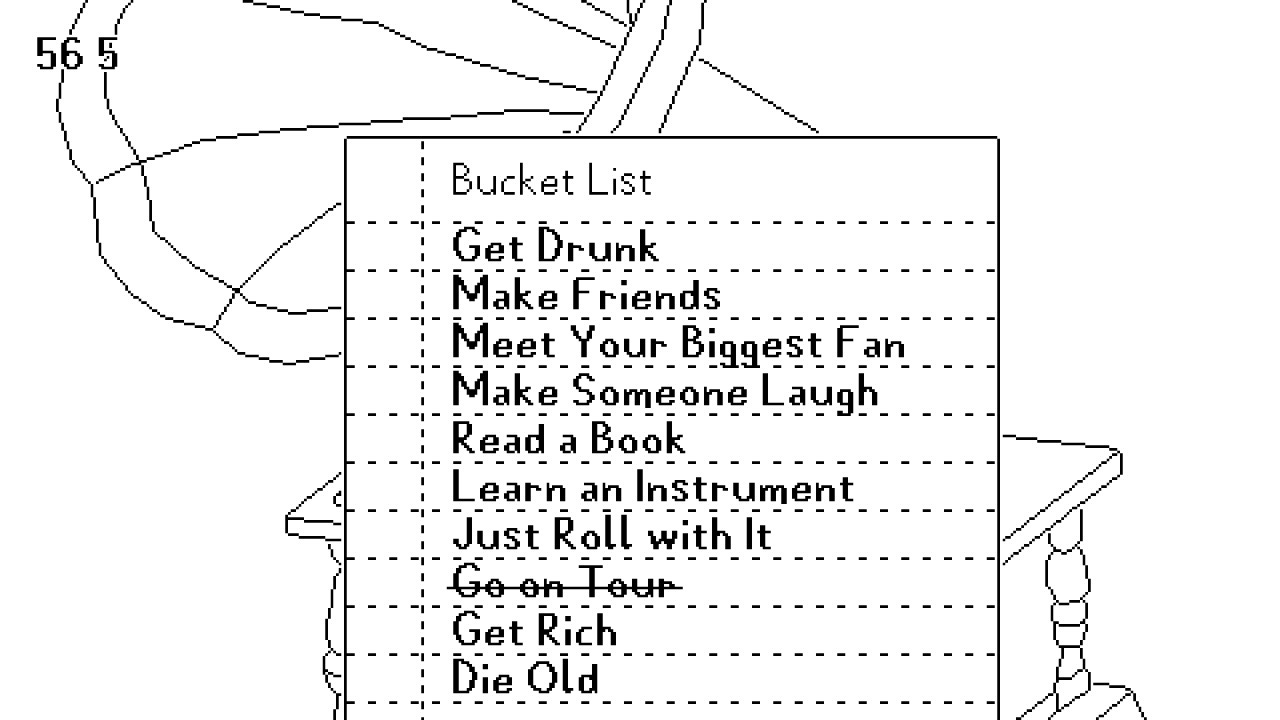
The fun lies in figuring out how to fulfill some of those wishes, some of them pretty ambitious for a creature that is usually remembered mainly for where it lands.
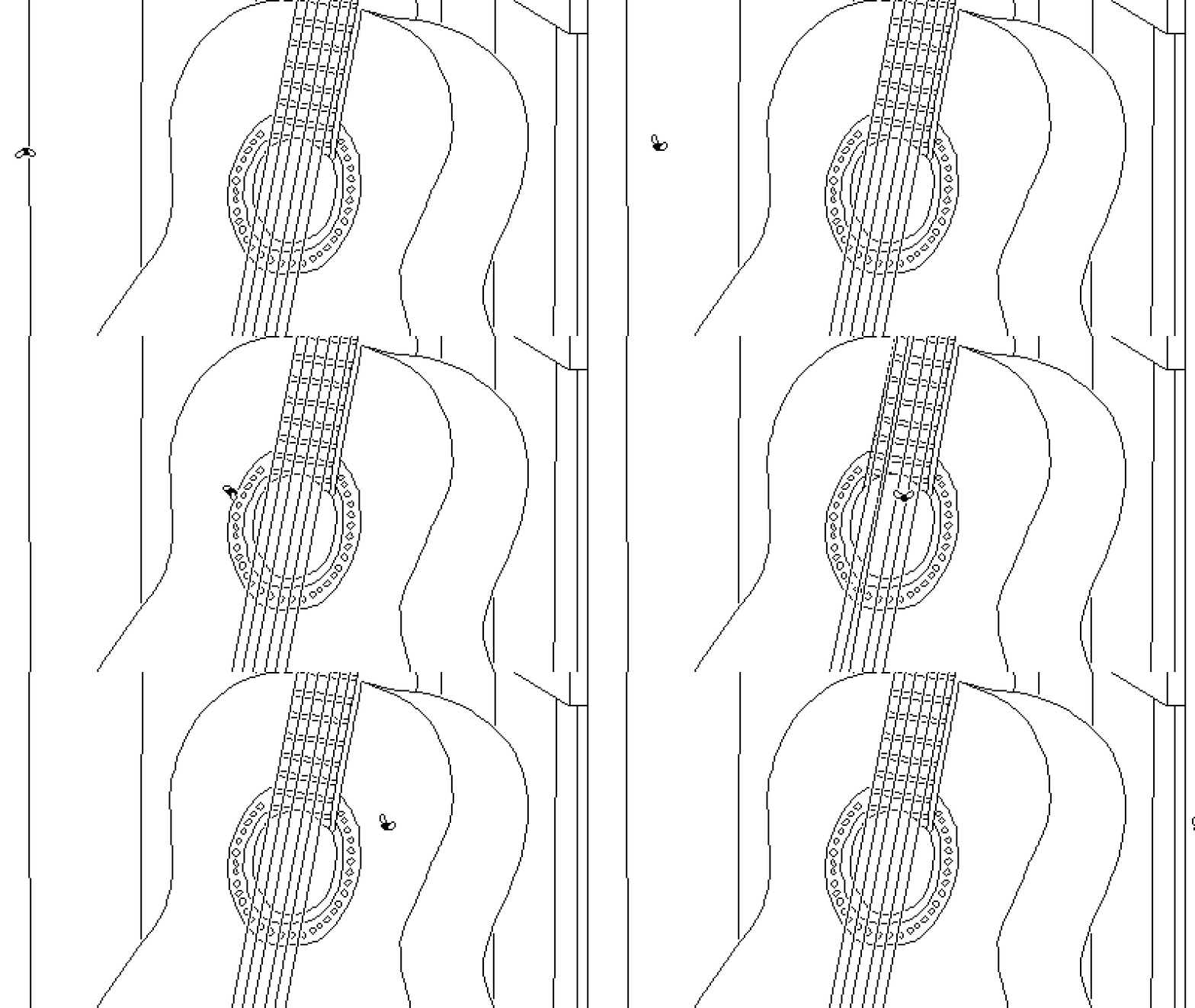
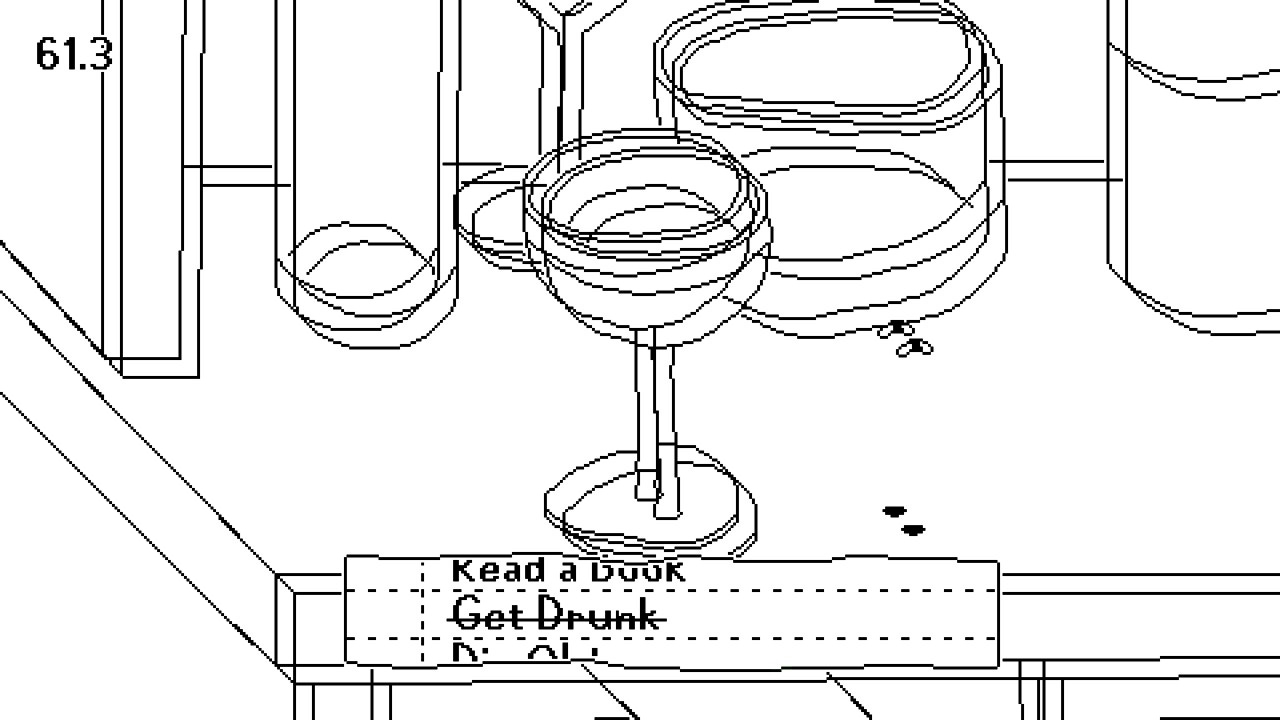
Okay, but what does this enterprising fly have to do with the flies in still lifes? Those had a very different existential posture. I’ll get there right after the break.
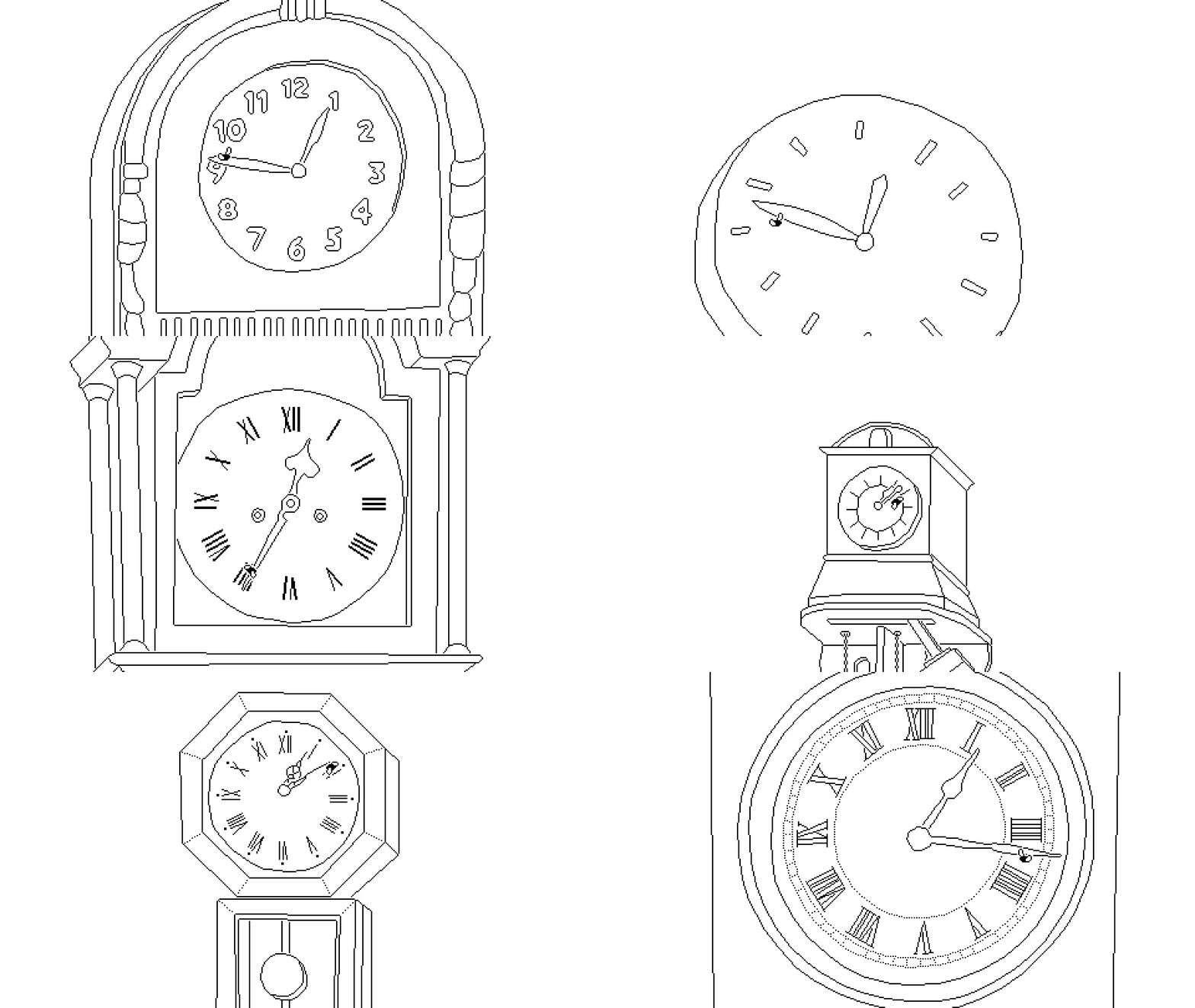
In Time Flies, time is everything, and a playthrough never lasts more than two minutes. A fly’s life is short, and the seconds you have left are displayed clearly in the top-left corner.
As if dodging too-hot light bulbs, too-fast fans, and droplets falling from badly closed faucets weren’t enough, time itself keeps you from seeing all the wonders hidden in the game world.
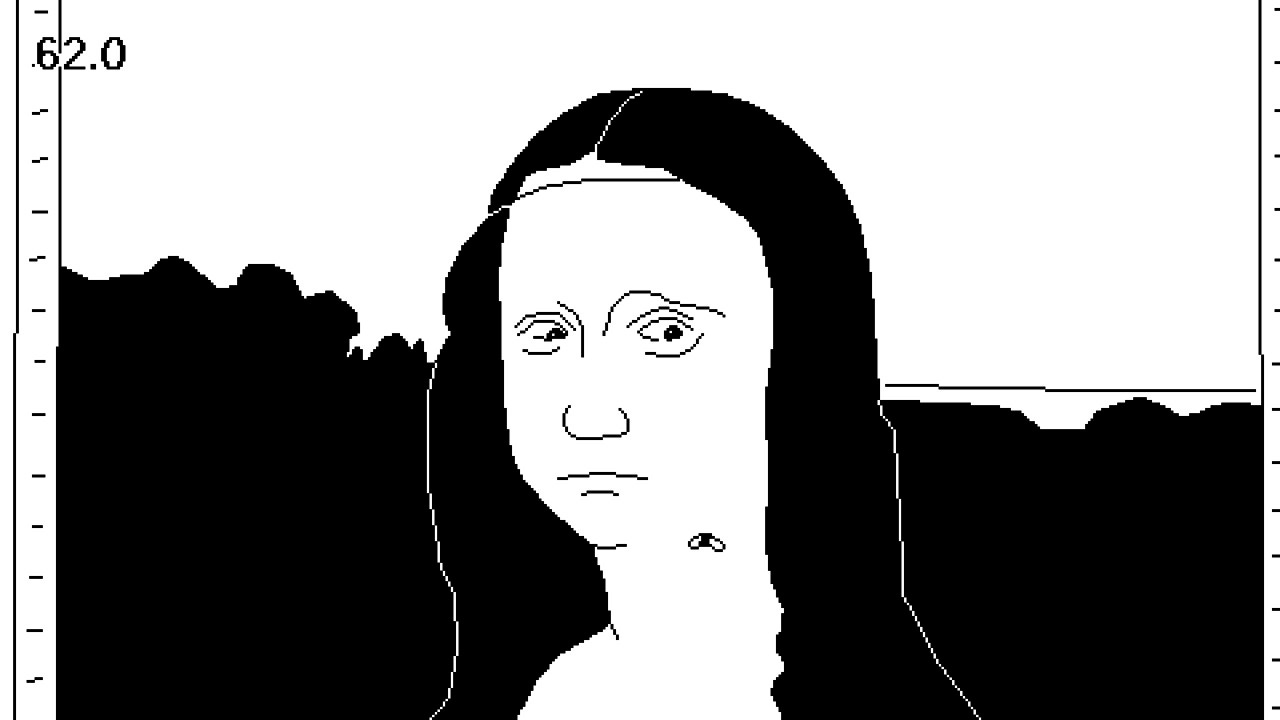
This is where the game pulls off its meanest trick. The fly in a painting, an omen of decay, reminds us that even a marvelous fruit at the peak of its beauty already has its fate sealed. It reminds us that death is universal. Fair enough. Kings die, peasants die, melons die, flies die, and sooner or later even the person who says “video games are stupid” dies, as does the one who says “video games are intelligent.”
Time Flies keeps that old memento mori intact, from the Latin: “remember that you must die,” but it adds one detail that makes the whole thing much harder to contemplate from a safe distance: not everyone gets the same amount of time.
At the beginning of every run, the player has to choose a country of origin, and depending on that choice they get more or fewer seconds. Same fly, same to-do list, different deal.


That is how a game that seemed merely clever turns ruthless. A perfect example of the kind of little game Artcade loves. A memento mori can remind us that we all vanish. True, but also convenient. Universal truths are elegant partly because they can hide the chaos underneath. Time Flies refuses to do that. It keeps death universal, but makes time unequal. The fly suddenly belongs somewhere. It belongs to a country, to a statistic, to a set of conditions it did not choose. Choosing one country rather than another can mean not having enough time to learn something new. Or to take in a beautiful view.
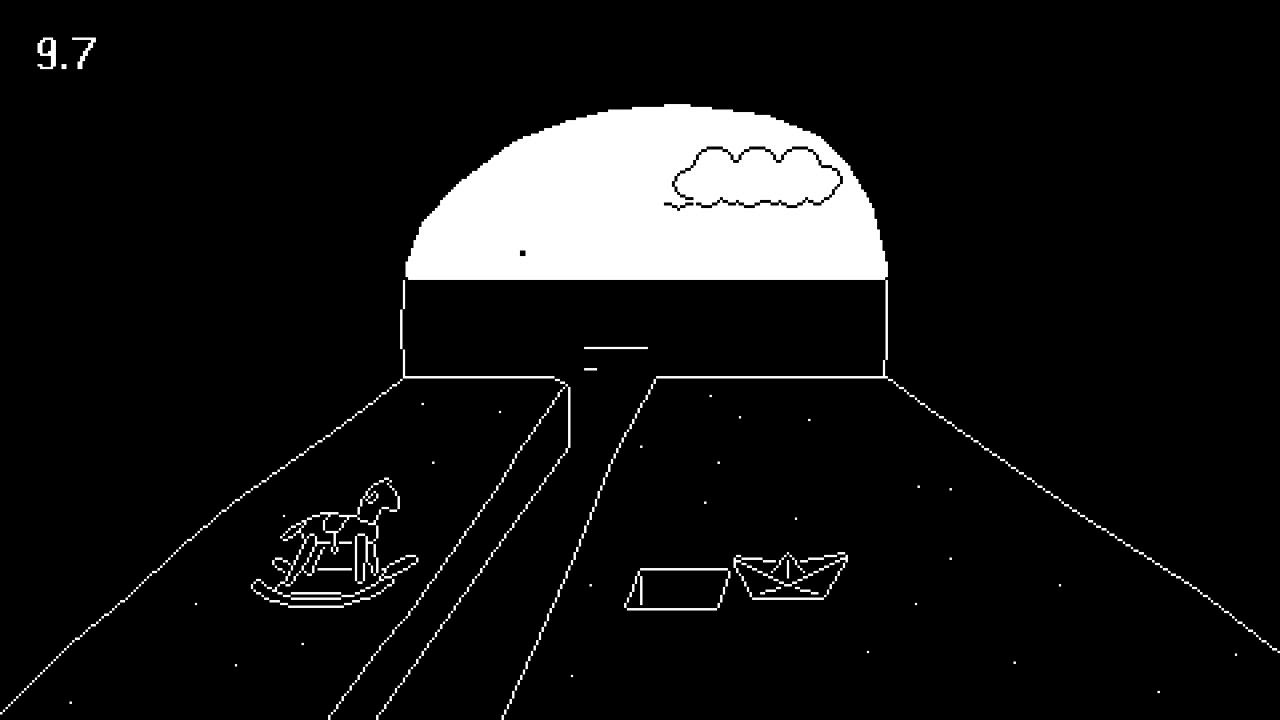
Michael Frei, Raphaël Munoz (2025) Time Flies [Video game] [Adventure] [2 hours] (Nintendo Switch 2) [PlayStation 5, Nintendo Switch, Windows, Mac] Panic
Information Desk:
Life expectancy changes depending on where you are, but what if I told you it can change from one train stop to the next too? Here’s an infographic for the Manchester area.
The most famous memento mori in Italian cinema appears in a movie starring Massimo Troisi, who outside Italy is remembered mostly for Il Postino, while here his comic talent is what people celebrate above all. In Nothing Left to Do But Cry, in the clip below, a friar yells at him, “Remember that you must die!” and he replies, “Yes, yes, I’ll write that down, absolutely.”
My last two coins
People like writing “life is short” because it sounds wise and looks good on mugs, posters, and underneath Instagram photos of sunsets. They write “life is short” because “life is short and also profoundly shaped by geography, class, infrastructure, and neglect” is much less elegant. It is also more expensive to print on a canvas tote bag.
That is probably one reason I love writing Artcade: it lets me talk about a melon with a fly on it and a video game where you buzz into furniture; and it lets me show the best things art and video games can do. Like taking ideas we think we’ve already understood and forcing us to lean in. Sometimes close enough to hear the buzzing.
Until the next episode, ciao!