

Welcome back to Artcade, the front door you open without ever knowing where it might take you. Doors all look the same until you realize each one has its own personality. There’s the one that slams shut at the slightest draft, the arthritic one that creaks, and the bathroom door that decides to jam exactly when your aunt has come over to visit. In short, a door is a promise: sometimes a threat, sometimes a gift. Today, it’s giving you this episode. Enjoy the read!
In Rome, in the gardens of Piazza Vittorio, there’s a door that leads nowhere. Off to a great start, you might say. I understand. Usually, a door separates two spaces and allows you to move from one to the other. The Alchemical Door, instead, decided that its job would be getting people to talk about it. It is also known as the Alchemy Gate, or Magic Portal, because one name simply wasn’t enough for it. Then again, in Rome, all you have to do is look inside a pothole to discover a historical artifact. Why shouldn’t a door have a legend of its own?
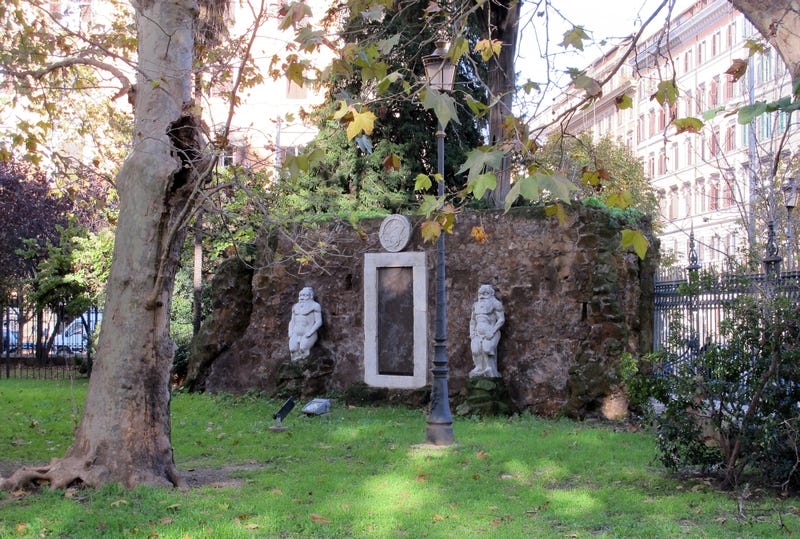
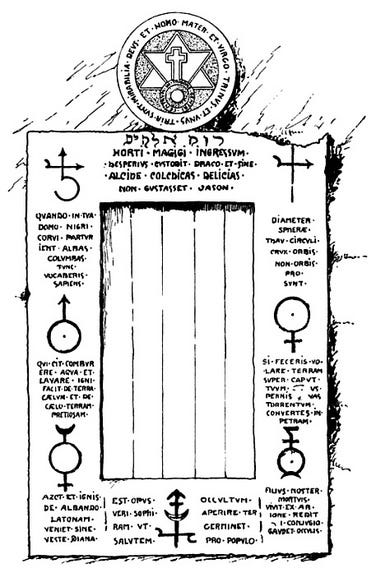
The Alchemical Door is what remains of Villa Palombara, the residence of Marquis Massimiliano Savelli Palombara, a man of letters with a passion for alchemy and esotericism. According to legend, a mysterious alchemist was hosted by the marquis and spent a night in the villa gardens searching for an herb that could produce gold. The next morning, he vanished through the door, leaving behind some traces of gold and a manuscript full of incomprehensible symbols. Palombara, unable to interpret those formulas, supposedly had them carved into the door.


I have my own interpretation of this legend, and above all I have a very precise opinion about the kind of herb the marquis and the alchemist were looking for, and smoking, that night, but I have no proof. So, sticking to the facts: the villa no longer exists, the alchemist disappeared, the marquis is gone... but the door is still here. At the very least, the carved formulas seem to bring good luck.

On either side of the door stand two statues of the Egyptian god Bes, magnificently bizarre in appearance. We Beses are all a little strange. They look like two guardians placed there to judge anyone who tries to understand the meaning of the inscriptions without having studied enough. In reality, they did not belong to Villa Palombara: the statues were found during excavations on the Quirinal at the end of the nineteenth century and placed there later.
So, let’s recap: we have a seventeenth-century alchemical door that opens onto a wall, relocated for no clear reason to a public garden, guarded by two Egyptian statues that have nothing to do with the original villa. Just from this paragraph, you can already tell we’re in Rome: only Rome, after all, could turn a move gone wrong into a mystery with metaphysical ambitions.
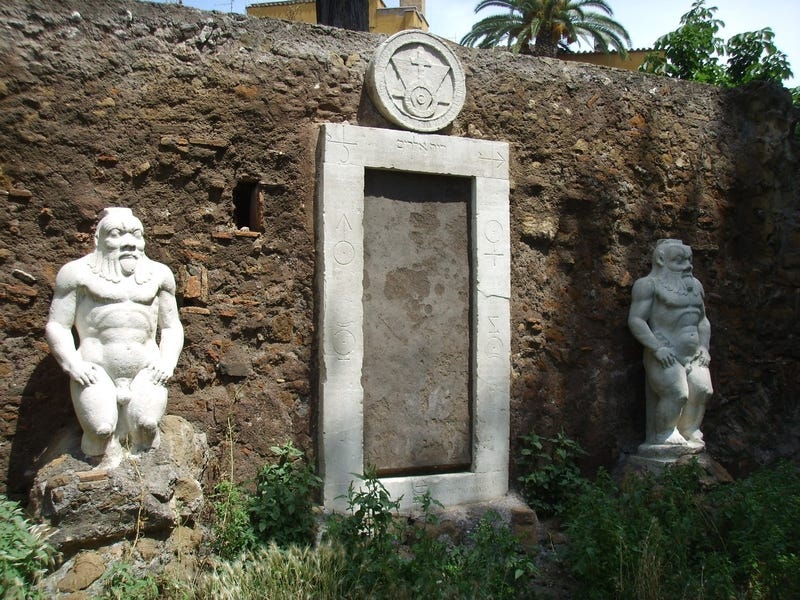
Massimiliano Savelli Palombara (1651–1681) The Alchemical Door [Architecture] [Limestone, Carrara marble] Giardini Nicola Calipari, Piazza Vittorio Emanuele II, Rome
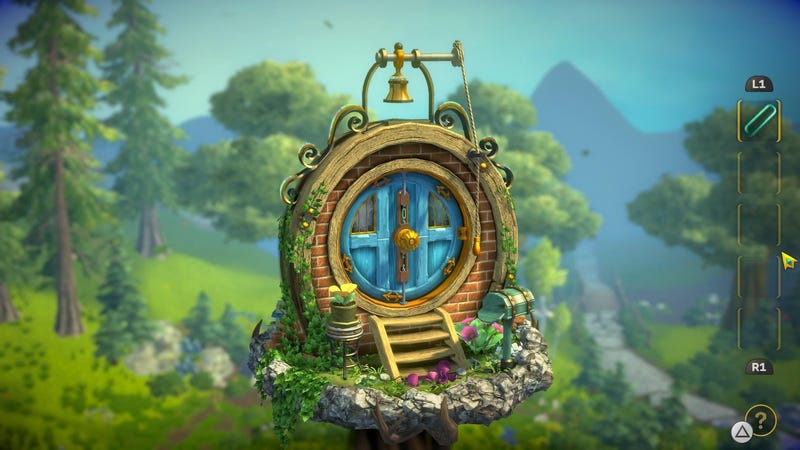
In Doors: Paradox, too, doors are just there. They do not lead anywhere. They are small, self-contained worlds, full of mechanisms that ask to be observed carefully. Each tiny diorama can be solved and the door opened, but unlike in your condo building, here you can’t call a locksmith or complain to the building manager. You have to unlock the door yourself.
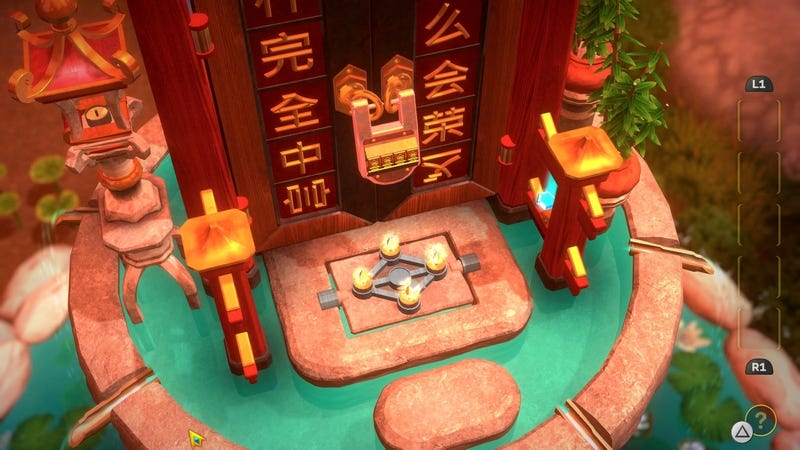


As with the Alchemical Door, the threshold here is not something to cross. It is something to understand. Otherwise, what we are facing is a wall. Maybe a beautiful wall, but still only a wall. In Doors: Paradox, we are not truly interested in what lies beyond. We are interested in the door itself. Its little theater. The way it resists us. The childish satisfaction of opening it and feeling like geniuses for three seconds, before the next level reminds us who we really are.
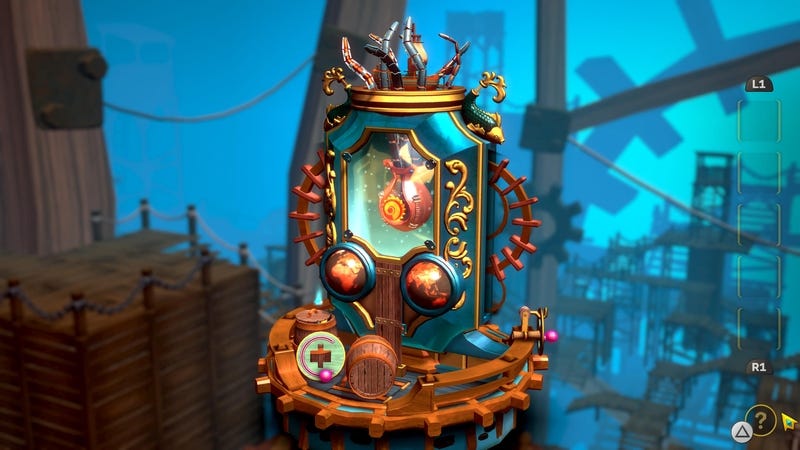
On one side we have a real monument, loaded with hermetic symbols, built around the idea that knowledge is hidden and must be deciphered. On the other, we have a video game where every door is a small visual enigma. Each time we solve one, we find a cat waiting for us. How do cats always know more than we do? Maybe that is the real mystery.


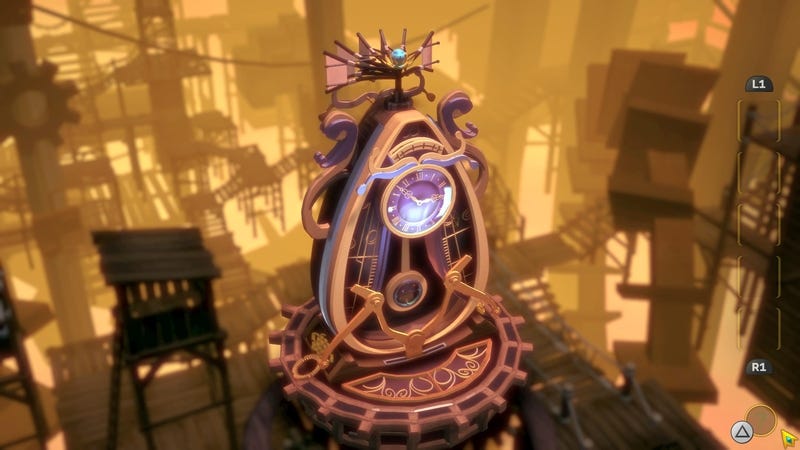
Big Loop Studios (2021) Doors: Paradox [Video game] [Puzzle] [5½ hours] (PlayStation 5) [iOS, Android, Windows, Nintendo Switch, PlayStation 4, Xbox One/Series X/S] Snapbreak
Information Desk:
I have to thank ROP for introducing me to Doors: Paradox, which is a little gem. His review is here.
Interested in a door drawn by René Magritte? Too bad, the auction is closed.
There are plenty of strange doors out there. But one I always think about is the one inside a wardrobe that leads to Narnia.
My last two coins
As children, doors are mysterious because anything could be behind them. As adults, they become more practical: the office door, the front door, the elevator door when we are late and the damn thing is occupied. I like games that bring me back to seeing things the way I did as a child. Also because I can enjoy my imagination much more now: I know for certain that behind the door I am about to open there is no monster, so I can be selective and fantasize only about wonderful things. Isn’t that an incredible advantage of being an adult?
Until the next episode, ciao!
hehe, quite the intro with the literal walled door. 😁 Very interesting to read.
Thank you for the shout and I'm real glad you enjoyed this little and simple gem. The puzzles are indeed quite charming and very relaxing... except when I encountered Mona Lisa, as what we had to do felt... very wrong. 😅
But beyond the work of arts, science and history... this game, well... you said it best: "bring(s) me back to seeing things the way I did as a child".