


Welcome back to Artcade, the free parking lot for your curiosity. Today’s a special episode—super special, actually—because we have a guest. I wish I could cue a nice drumroll here, but that’s hard to pull off in a newsletter… improvise as you see fit. Please give a warm welcome to *drumroll* Massimiliano Di Marco! *applause*
If you want to get to know Massimiliano’s work in video games, you can read Insert Coin, his newsletter, or listen to his podcast (both, fair warning, in Italian), or visit his racing-car dealership. That last one I may have made up. Then again, as you’ll read in this Artcade episode penned by him, the idea isn’t that far-fetched. Enjoy the read!
It would be easy to look at Art of Rally and see mostly a racing game. Sure: its goal is to let you drive rally cars as if Group B had never ended—and as if the fatal crashes that sealed its fate, and the cancellation of the even more extreme Group S, had never happened. From 1967 onward and up to the mid-1990s, you tackle season after season, each with a growing number of rallies. After five seasons, you switch group: first Group 2, then Group 3, and so on. Thirty seasons with the most iconic cars of those years.
But the title Art of Rally already hides the first sleight of hand. It’s not the art of driving rally cars; it’s the art of rally itself. Its colors. The crowds who greet, in the corners, cars at high speed. That blend of gorgeous natural landscapes invaded by race cars that pollute like cement mixers.
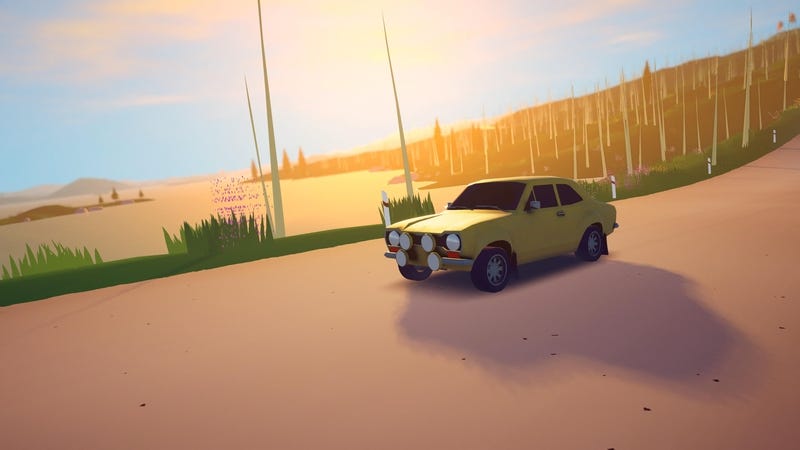
Art of Rally is a video game that makes you want to stop driving. A contradiction, I know. But when you’re climbing a mountain in Japan and the setting sun salutes a Porsche 911; or when, cutting across the Sardinian stages, a Lancia Delta S4 brushes against the embraces of a roaring crowd; or when a Subaru Impreza dances through Sweden’s snowy curves—in all these moments, and many more, the grace of Art of Rally makes you want to pull over, park in a corner, and breathe in, with a deep videogame inhale, that exact feeling. That art of rally.
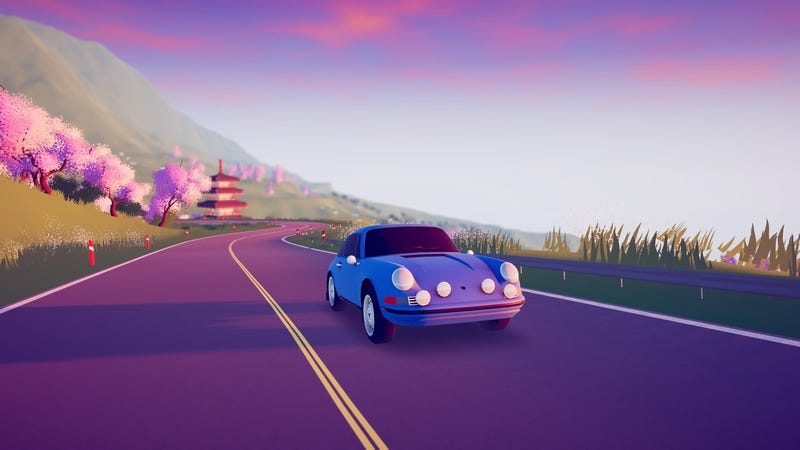
That mix of people and joy and color and vistas and larger-than-life adventures. You stop for a second, sometimes two. Time eases up and you might even get a little emotional. With that stylized, tiny car carving a motor-legend—like the rally cars of the marvelous Group B years, or that Group S that never was—and fitting it into a mosaic recreated through an enthusiast’s eyes.
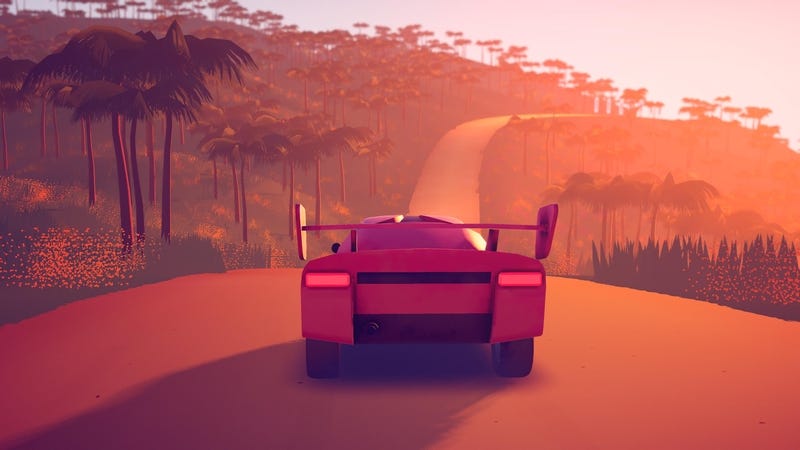
Art of Rally is a dream that doesn’t want to stop existing. It’s the memory of glorious years, when rally and people were closer than ever, and the hope that they can be retraced forever. And that little car, that stand-in that can’t carry its real name because the developers couldn’t afford the official license, needs care. It needs cleaning. You have to fix the bent chassis and the gearbox that blew in the third stage of the last season. You need to learn it and understand it so it can lead you into the sinuous dance of a night rally in the savannah. Suspended between the urge to shave a second off the clock and the urge to stop at the next bend, because that sunset is everything.
Funselektor Labs (2020) Art of Rally [Video game] [16 hours] (PlayStation 5) [Nintendo Switch, PC, PlayStation 4, Xbox One, Xbox Series X|S] Funselektor Labs, Noodlecake Studios
I stumbled—by chance, as often happens lately with things I fall in love with—into the artwork of Guidarto. I was watching a YouTube video, and the creator suggested checking out what this Norwegian artist had made, for anyone interested in driving. Not in the strict sense—not the mechanical motion of pistons—but the spirit of sitting behind the wheel. The feeling of travel and discovery and even vindication.
The car not as a mere means of transport, but as a spirit guide on a journey that goes beyond asphalt, fuel, and wheels. A journey that brushes up against freedom and exploration and vanity. The car as an expression of the self.
The collection Driven by Dreams (image below), for example, is made up of five pieces. Each one captures a different moment in chronological order: One Day is the dream of a Porsche 964, on proud display in a shop window; Long Way Home is that dream come true; in Now or Never, the blue Porsche takes a high-speed curve on a track; Waiting for Tomorrow tells a more melancholy phase, with the car gathering dust in the garage; and it ends with Second Chance: the car finds a new owner and maybe, just maybe, will roar again.

In Reflection Point, Guidarto plays with a double meaning: the sun’s reflections on the car, and a pause from the daily routine—sitting in the car, taking in the view—to make room for your thoughts.
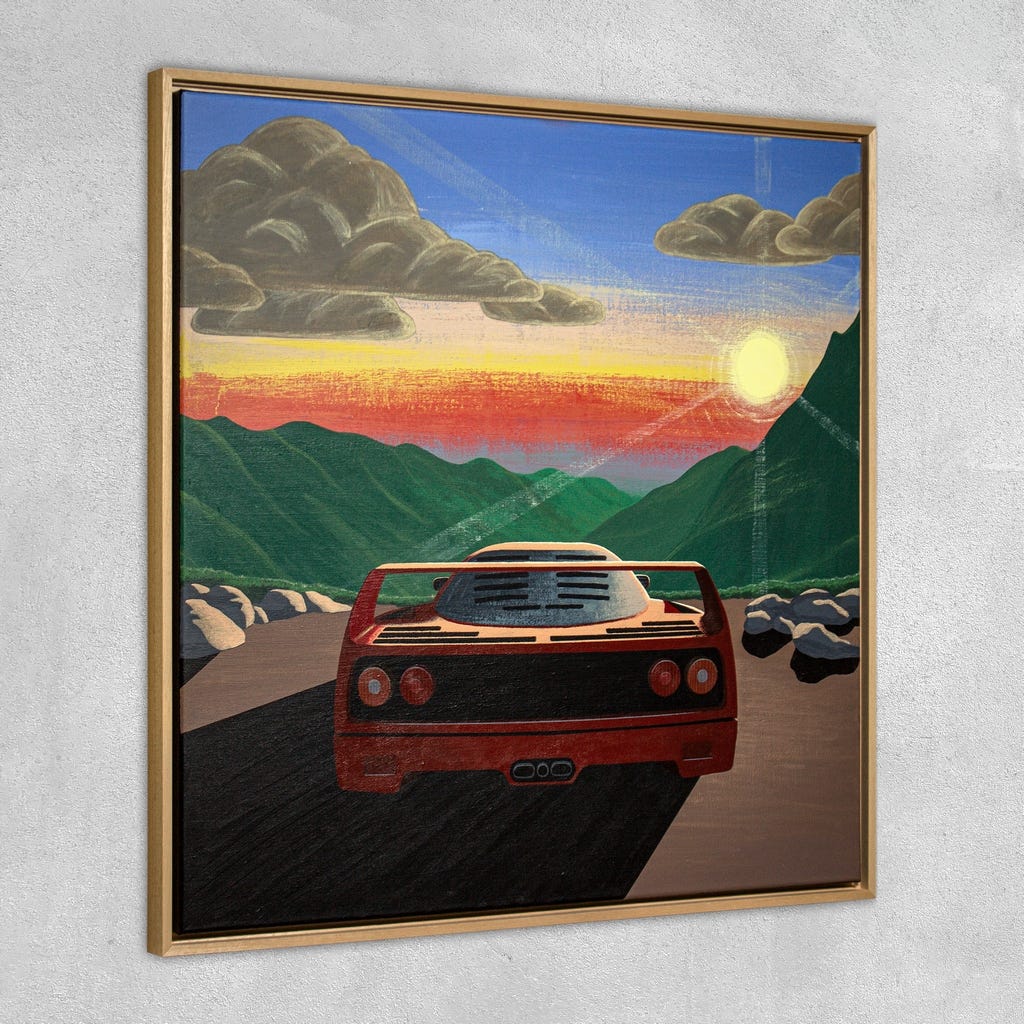
These are moments everybody has lived. The Porsche, probably not. But how many thoughts were born while driving? How many conversations never started but were right there on the verge of coming to life? How many mad dashes just because you couldn’t wait to get home? And how many other times, instead, did the car bottle up the frustration and sharp melancholy of leaving home behind?
With simple colors and clear, familiar images, Guidarto shows this other side of driving and pins it down with clean simplicity.
Information Desk:
If Guidarto strikes a chord for you too, you’ll find some of his pieces for sale on the Modern Art Society website. Or you can follow him on Instagram, or poke around his YouTube channel to watch him paint.
Is driving in Art of Rally really that good? If you want to dig deeper, check out the video below:
My last two coins
Thanks, Massimiliano, for making me reflect on how I experience driving. One day I’d love to hear an engine on a circuit and push a car in ways that just aren’t possible on the roads we all use every day. But there’s another car-related specialty you can practice daily, and it’s a specialty where I, without fear of contradiction, excel: the art of parking. I don’t hit the heights of my college years anymore and mostly settle for squeezing into spots that beat my car’s width or length by a few centimeters; back then I was reckless and parked behind parking lots, on top of parking lots, in upside-down parking lots. I created spaces where none existed, to the amazement of passersby and my passengers. Sometimes, after inventing a spot, a normal parker boxed me in and even the exit turned into a creative act. Some friends still remember (fondly? I’m not sure) the time we looped around the block on the sidewalk. If an artistic-parking championship existed, I think I’d enter. Who knows, maybe it already does. Until the next episode, ciao!
Cool article :D Loved to read and find about this gem. Absolutely need to try it, as I love games that make you want to stop and look at awesome vistas... and especially after finding I already own it on Epic xD, most probably gotten through the free weekly game and forgotten.
Keep up the awesome work!